


In some verticals, reps will get sussed out if they don't know the industry cold—and no amount of sales methodology training will save them.
Over the second half of last year, Handle's sales team saw win rates climb nine points, average deal size jump from $140K to $240K, and sales cycles drop from 12–18 months to nine months—even on their largest enterprise deals.
Those results didn't come from a new product launch or a pricing change. They came from a nine-month overhaul of how Handle's reps learn, prep, and sell: a certification program grounded in industry immersion, a reinforcement system that makes adoption visible and accountable, and 16 custom AI tools that put deal intelligence in every rep's inbox every Monday morning.
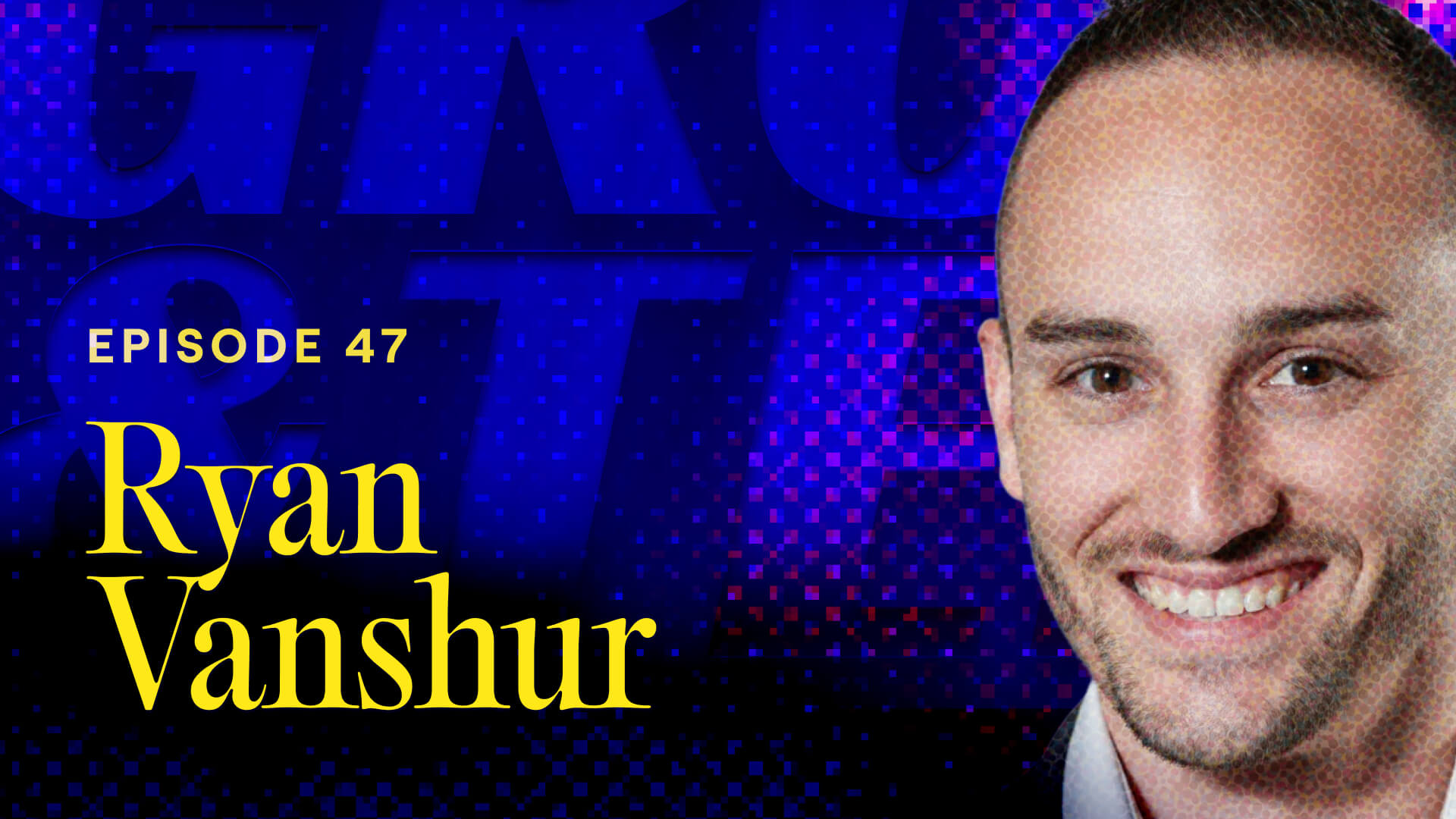
Ryan Vanshur is VP of Go-to-Market Intelligence and AI Solutions at Handle, a construction payments and compliance platform serving material suppliers and equipment dealers. He joined after a decade co-founding CourseKey, a workforce education SaaS he helped build from a student startup at San Diego State to a private equity exit.
The through line across all of it is a conviction Ryan developed selling into nursing schools, trade programs, and cosmetology campuses: in vertical SaaS, generic playbooks don't survive contact with a buyer who can tell in thirty seconds whether you understand their world.
Ryan’s certification gets reps credible. The AI tools keep them sharp. Together, they've cut Handle's ramp time and changed what a Monday morning looks like for every AE on the team. Here’s the playbook behind those changes.

Growth Bytes
Top takeaways:
- PIndustry knowledge before sales methodology. Ryan's 90-day cert is 40% industry immersion, 30% product, 30% sales. Reps learn lien rights and contractor payment flows before they ever touch a discovery framework.
- Capstone-based certification, not content completion. Getting through the material doesn't mean you're certified. Reps run a full mock sales process—multi-persona role play, executive discovery, live demo—and they're not done until they can do it convincingly.
- Training events are expensive theater without a reinforcement plan. Build the accountability loop before the SKO, not after. Contests, coaching reports, and public recognition are what make the concepts stick.
- AI works best when reps don't have to think about AI. Ryan doesn't train reps to write good prompts—he builds guardrails so every AI interaction produces quality output regardless of how the rep engages with it.
- The compound effect is real, but slow. Win rates up nine points, deal size nearly doubled, sales cycles cut by a third. Those results showed up six months after the enablement work started. If you're measuring enablement ROI at 30 days, you're measuring the wrong thing.
Vertical SaaS lives or dies on industry credibility
Over ten years at CourseKey, Ryan dominoed through vertical after vertical—nursing, trades, cosmetology, emergency services. Each one required starting from scratch.
"The way that we sold to nursing was not the way that we were going to be able to sell to the trades. And it wasn't the same way that we were going to sell to the cosmetology schools or paramedics. We had to literally learn each of those individual verticals to understand the language, the environments, what the requirements were."
The lesson wasn't just about messaging. It was about credibility.
The first time Ryan showed up at a trade school to demo CourseKey's mobile engagement software, he walked in expecting a lecture hall and found automotive bays, welding stations, and students doing hands-on work. The instructors asked where he'd install the hardware. But CourseKey was a software tool built for 500-student university auditoriums—there was no hardware.
That gap between what Ryan thought he was selling and what the customer thought they were buying was the origin of a philosophy he's spent a decade refining: a rep who doesn't understand the buyer's world has nothing real to say to them.
When Ryan joined Handle, he didn't know the industry at all. So his first move wasn't to build a training program—it was to go learn the world his customers lived in before he could tell anyone else how to sell it.
Immerse before you enable: the first 90 days at a new vertical SaaS company
When Ryan joined Handle in late 2024, the company had just doubled its headcount. Training was ad hoc, content was scattered across tools, and there was no 30/60/90 plan for new hires.
His sequence:
- Hunt down the founders.
- Find the sales leader who's been there since day one.
- Talk to Product.
- Listen to customer calls and analyze transcripts.
- Extract the tribal knowledge before it calcifies into something no one can access.
"Go talk to all of these exceptional people in the organization that serve these different functions and extract the tribal knowledge from their heads. There were so many things that people were waiting on—and it actually became a blocker."
The tribal knowledge problem is one Ryan had seen before. When CourseKey went remote during COVID, the institutional knowledge that lived in the co-founders' heads suddenly became a chokepoint. Decisions stalled. Things that were obvious in an office became invisible on Zoom.
His answer at Handle was to treat himself as the first student of the program he hadn't built yet.
- What would a new rep need to know?
- What would they get wrong?
- What would get them sussed out in the first fifteen minutes of a customer call?
He audited the tech stack, identified gaps, kept some tools and dropped others, and started building a certification program from the ground up.
The CFO had handed him a recertification project. The headcount doubling meant the high-touch approach the sales leader had used with the first few AEs wasn't scaling. Ryan's job was to make it systematic.
The 90-day cert: 40% industry, 30% product, 30% sales methodology
Ryan's certification program is structured in three phases, and the order is deliberate.
Phase one: Industry immersion
Phase one is always industry immersion—regardless of whether a rep is a seasoned AE or a first-time BDR. At Handle, that means learning mechanics liens, waiver compliance, contractor payment flows, and construction finance terms. But not from a textbook.
"It's scenario-based. I'm able to use AI to create these case studies and interactive tools that they can go in and speak to our biggest customers and chat with the personas that were involved and ask them questions. Here's an actual situation where a supplier almost lost two million dollars because a competitor missed a lien deadline. Walk me through what happened here."
The AI-powered scenarios are one of the more interesting applications of his EdTech background. Ryan spent a decade building learning systems for trade schools—institutions where graduates need to actually know what they're doing when they show up on day one. A cosmetology student who can't do a cut. A nursing student who doesn't know the medication. He's imported that same standard into sales onboarding.
Phase two: Problem-solution mapping
Phase two is product fluency—but the frame is problem-solution mapping, not feature training.
When a customer says they're worried about double payment risk, a rep needs to know exactly where in the product that's solved and what the ROI calculation looks like.
The question Ryan asks: can you connect the customer's problem to the feature that solves it and the number that justifies the investment?
Phase three: Sales methodology
Only now do you train on sales methodology—discovery frameworks, demo structure, navigating buying committees, and tech stack training.
The capstone
Completing the content doesn't mean you're certified. Reps run a full mock sales process:
- Multiple personas
- Executive discovery
- Multi-threading between disco and demo
- A live demo delivery
If they can't do it convincingly, they're not done.
"You could kill an opportunity before it ever becomes a thing if we let you go out there unprepared. By the time that 90 days comes, it's like holding dogs on a leash, and they're just itching to get off."
Without a reinforcement plan, training events are expensive theater
SKO season is Ryan's favorite example of the reinforcement problem. Companies pull reps out of the field, invest heavily in two or three days of programming, and then send everyone home. Six weeks later, nothing has changed.
His answer is to build the accountability system before the training happens—not after.
"The formula is visibility plus accountability drives long-term adoption. You can run all the training you want, but if you don't have reinforcement systems and content that people use, it's just expensive theater."
At Handle, reinforcement takes a few forms:
- Behavior-specific sales contests. When the team was launching outbound, contests were targeted to phone activity metrics because AEs weren't used to picking up the phone. When the focus shifted to enterprise accounts, incentives went up for booking meetings with whale accounts versus standard ones.
- AI-scored demo competitions. For three months, Handle ran a demo competition where every rep's demos were evaluated against an agreed-upon framework—same criteria, no bias, no manager fatigue. Reps could see their scores over time and watch their own improvement.
- Data hygiene scorecards. MEDDIC discovery intel wasn't being captured in Salesforce. Ryan partnered with Scratchpad to build a weekly hygiene report—listing every rep's name, their score, and exactly what was outdated or missing. The team agreed on 85% as the standard. When they started, the average was in the low 50s. Now they're comfortably above the threshold.
- Public recognition. Especially in a remote environment, Ryan is vocal in Slack about calling out reps who model the behaviors the team is trying to reinforce—not just the ones who close deals.
From duct tape to intelligence layer: how the AI stack actually came together
Ryan's AI journey didn't start with a grand architecture. It started the way most people's does—with ChatGPT and a lot of copy-pasting.
When he joined Handle, he was using the enterprise version of ChatGPT with one thread per customer. He'd dump in transcripts, ask questions, and pull out intelligence to help reps prep for calls. It worked well enough that the reps noticed. And then it became a bottleneck.
"All the reps started realizing, Ryan can get us really good intelligence because he's doing this AI thing. So then it became a bottleneck. There is a point where I realized I could keep doing these MVP ad hoc, semi-manual solutions, duct-taping together a few different ideas."
The duct-tape phase taught him something important: all the intelligence Handle needed to win deals already existed. It was in Salesforce, Zoom transcripts, Outreach sequences, Slack, and customer calls.
"I started realizing there's so much intelligence if I can just find a way to gather it. I can give reps the tools and the training artifacts and the interactive resources, but I knew they wouldn't use those in their day-to-day as account executives."
Ryan spent about six months in that duct-tape mode before realizing he needed a context layer—a single intelligence foundation that connected all the data sources without requiring him to maintain individual API connections and re-upload context into every tool.
He chose Endgame as the consolidation layer. Once it was connected to Salesforce, Zoom, Outreach, and Dock, everything else started to accelerate.
"If you go out and just start building a bunch of random tools and you don't actually solve the context layer issue, you'll do what I did and spend six months duct-taping a bunch of Frankenstein solutions together and wondering, is this safe? What did I build? How does it work?"
That context layer is what made the next phase possible.
The AI system that gives reps their Sundays back
With the data foundation in place, Ryan started building purpose-specific applications on top of it. He's built 16 in nine months. Some are automated. Some are conversational. All of them are designed around one principle: the rep shouldn't have to be a good prompt engineer to get a good output.
Now, every Monday morning, a Handle AE opens their email and find a weekly coaching report:
- A seven-day lookback on the deals they worked and how well they executed their frameworks
- Specific gaps to address going into the new week
- Everything on their schedule: who they're talking to, where each conversation left off, and any trigger events (acquisitions, new locations, leadership changes) worth knowing before they reach out
"What we used to do—or I begged people to do—was spend some time on a Sunday night and plan your week in advance. They get that time back with their families now."
Every open opportunity runs through a deal-risk analysis system that evaluates 16 signals across "why do anything, why now, and why with Handle."
When a new call transcript comes in, the system sends a coaching report flagging the deal's risk level and suggested next steps.
BDRs run five standardized prompts on every new account, producing stakeholder maps, pre-qualification scans, competitive analysis, and ABM strategy before the AE ever touches it.
"I've got guardrails, so it doesn't recommend features that don't exist just because it sees a competitor has one. It can't create any ROI stories that it can't actually point to a resource or transcript. And it has to tell you if it's taking a guess so you can go validate it."
Ryan says the result is “more like a Fitbit” for the sales process than a copilot. Reps aren't navigating an AI tool—they're receiving intelligence, on a schedule, in a format that tells them exactly what to do next.
The business case recommendation system might be the highest-leverage piece. Every business case is generated fresh—context-specific, pulling actual quotes and data from that account's history. No two are the same. Because the champion has a compelling, tailored document for internal sales conversations, deals close faster.
"We're closing million-dollar deals in half the time because we're making it easy to enable our champions to go and sell internally."
"Now all you really have to do," Ryan says, "is just be a sales professional."
Systems of record vs. systems of intelligence: the new GTM org chart
The "death of SaaS" narrative gets a lot of airtime on LinkedIn. But Ryan doesn't buy it—at least not the version that says horizontal software just stops existing.
His read is more interesting: internal micro-SaaS will fill the gaps that horizontal tools were never designed to address.
When you're selling compliance software to construction material suppliers, your needs are specific enough that bending Salesforce to fit is a losing proposition. The answer is building a point solution that does exactly what you need.
"I'm more interested in APIs and MCP servers than I am in what functionality you offer across the board. SaaS companies will eventually become API companies. That's all you're really going to need from them."
What that creates is a new kind of GTM role—one that doesn't really have a name yet, though Ryan's new title is one attempt at it.
He draws a clear line between two functions: the person who makes data in systems of record bulletproof and the person who makes that data actionable.
His counterpart at Handle owns Salesforce architecture and data governance. Ryan owns the intelligence layer—the coaching reports, the deal risk analysis, the AI applications that turn raw data into decisions. They're not competing functions. They're complementary ones. But most companies are still trying to hire a single RevOps person to handle both.
"Client success is a philosophy of the company—it's not a department. And every single department should have some sort of objectives around making customers wildly successful."
The same logic applies to AI: it's not an IT project or an enablement initiative. It's a go-to-market operating system. And someone has to build it.
The reps see it that way, too. Following their last SKO, every rep on the team—including those who weren't naturally tech-forward—is using the AI tools Ryan built. Not because they were mandated to.
Because Sunday nights are for something other than planning their week.
Watch the full episode
Watch Alex and Ryan's full conversation on Grow & Tell, Dock's podcast for revenue leaders.


Related Revenue Lab Articles


.webp)


Templates for Sales, Onboarding,
Projects and Portals
Customize and share with clients


