






















Here's the thing most sales leaders worry about: "Will my team actually use this, or will it become another dusty tool in our tech stack?"
The short answer: yes. Sales rooms are one of the rare tools reps actually ask for—not something you have to force on them.
Reps adopt sales rooms because they eliminate busywork: Unlike most sales tools that add work to a rep's plate, sales rooms remove the friction that kills their day. No more crafting epic follow-up emails from scratch for every single deal. No more hunting through folders for the latest deck version. No more "can you resend that?" emails interrupting their workflow.
When enablement teams roll out Dock, they typically see reps creating 15-20+ workspaces in their first week—without extensive training or constant reminders. That's not normal for sales tools. Usually you're lucky if reps remember to update Salesforce.
It spreads organically because reps see immediate value: The adoption pattern is pretty consistent: one or two reps start using sales rooms, their deals start moving faster, and suddenly the rest of the team is asking how to get access. Sales leaders report getting Slack DMs from reps saying things like "I don't know how I sold before this" or "Can we please never take this away?"
That's because prospects actually respond. When a buyer opens your follow-up and says "Wow, this is exactly what I needed" instead of going radio silent, reps don't need convincing about the value.
New reps ramp faster with templates: Your best reps already have a winning follow-up process that the rest of your time wants to follow. With sales rooms, you can templatize that playbook so every rep—including brand new hires—delivers the same high-quality experience from day one. The first follow-up a new rep sends looks just as polished as someone who's been there for two years.
The reality: reps want tools that make them look good and close deals faster.
Sales rooms do both. That's why they spread through teams organically instead of requiring executive mandates and quarterly adoption campaigns.
That's why they spread through teams organically instead of requiring executive mandates and quarterly adoption campaigns.
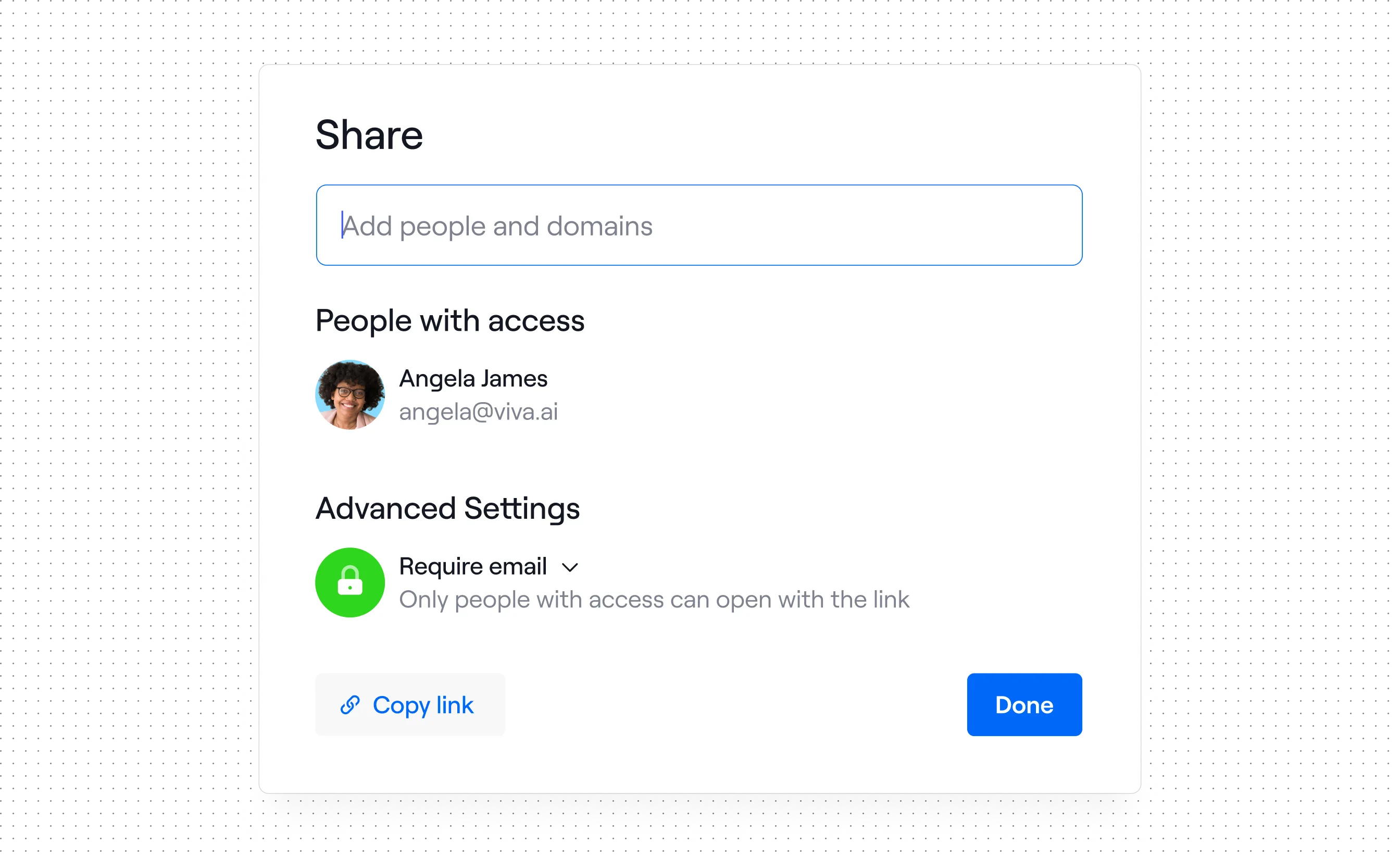
We’ve found prospects are generally excited to use Dock as it’s a frictionless experience and ultimately makes their life easier too. Prospects don’t need to create a login/password to engage in a Dock workspace. They just put in their email and on the backend sales reps have security controls for specific domains and emails.
Dock is just a link, which is the atom of the Internet. Everyone is comfortable with the concept of links.
That being said, our best practice is to introduce Dock workspaces on a call and within follow up emails. That way clients know what to expect and what resources are available within the workspace.
When prospects don’t engage with a Dock workspace, it’s a great signal to the sales rep on the quality of the buyer. It helps a sales rep understand whether it makes sense to spend more time working on that deal or move on to someone who is more engaged.
Most digital sales rooms stop at making follow-up look prettier. Dock goes further—it's the only platform built for the entire customer journey, from first demo to renewal.
1. It's not just a deal room—it's a full enablement platform
While other tools focus narrowly on sales content sharing, Dock combines digital sales rooms with content management, learning tools, and AI-powered guidance. That means your enablement team can manage the full revenue process in one place instead of stitching together separate tools for deal rooms, training, content libraries, and onboarding.
2. Real customer lifecycle support—not just sales
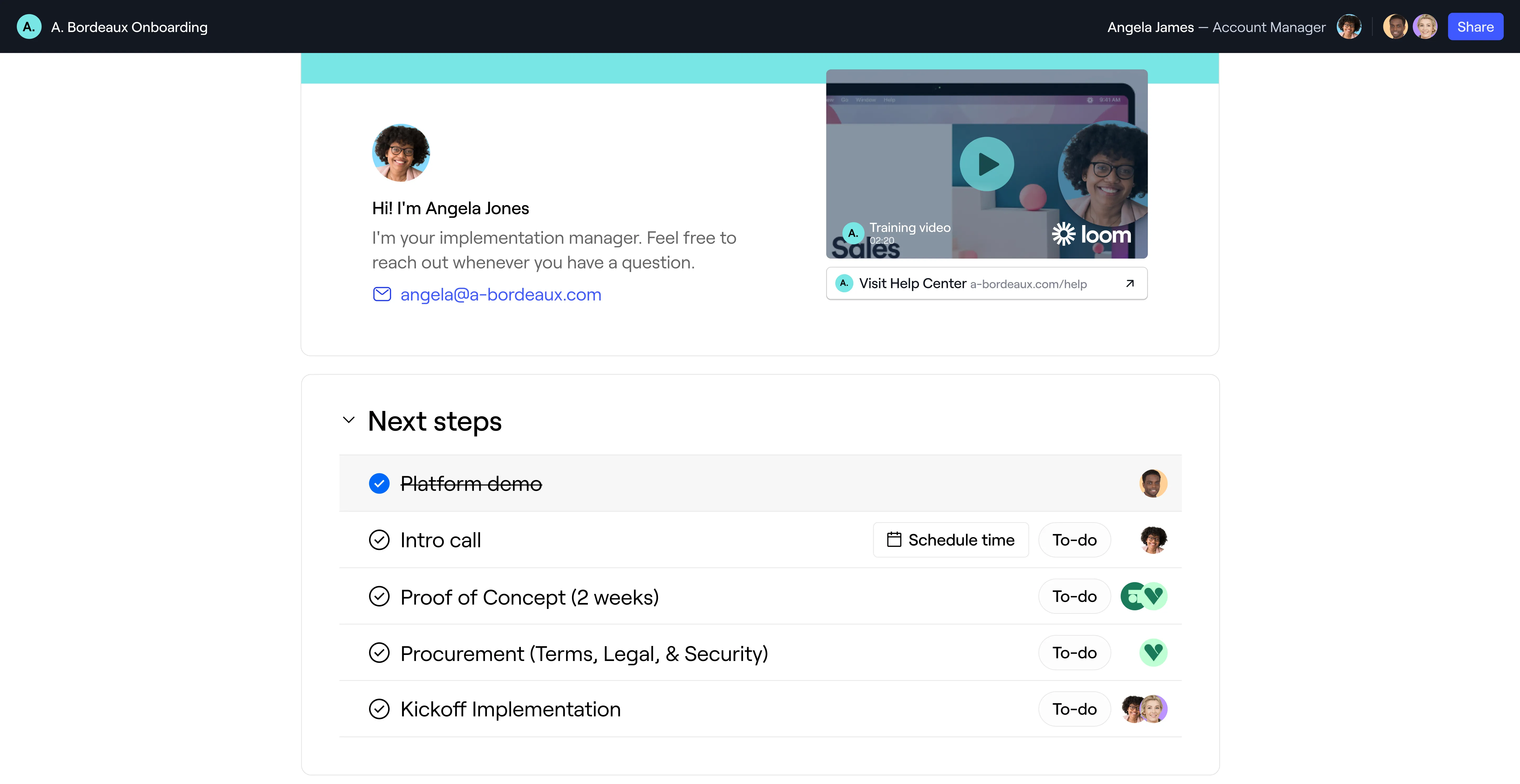
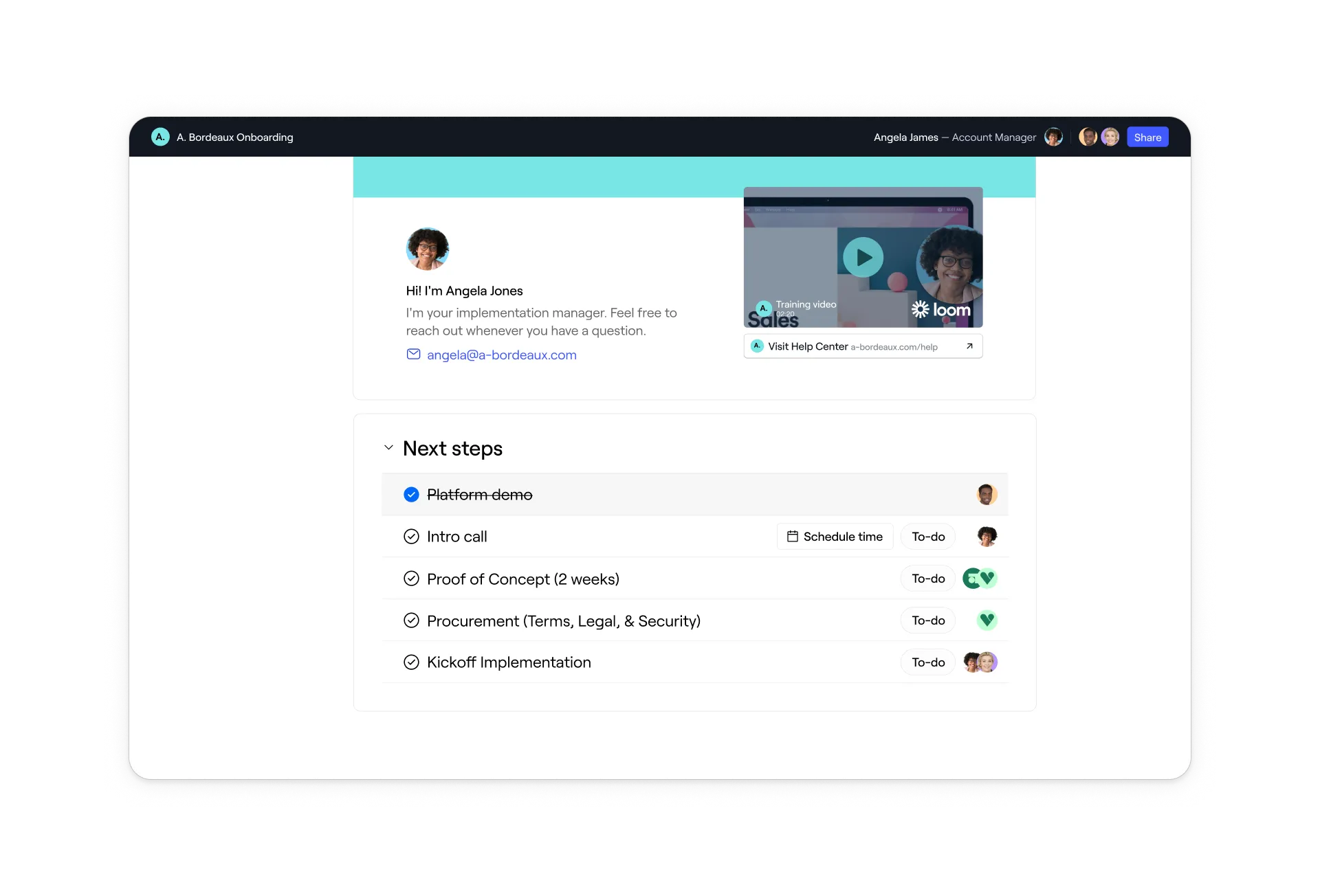
Other sales rooms claim they support onboarding, but in reality, they only provide basic checklists. Dock includes actual project management capabilities purpose-built for onboarding: automated tasks tied to your CRM, relative due dates, progress dashboards, and completion reporting. The same workspace that closed the deal becomes your customer's implementation hub—no awkward handoff, no asking them to learn a new tool.
3. The most advanced AI for sales enablement
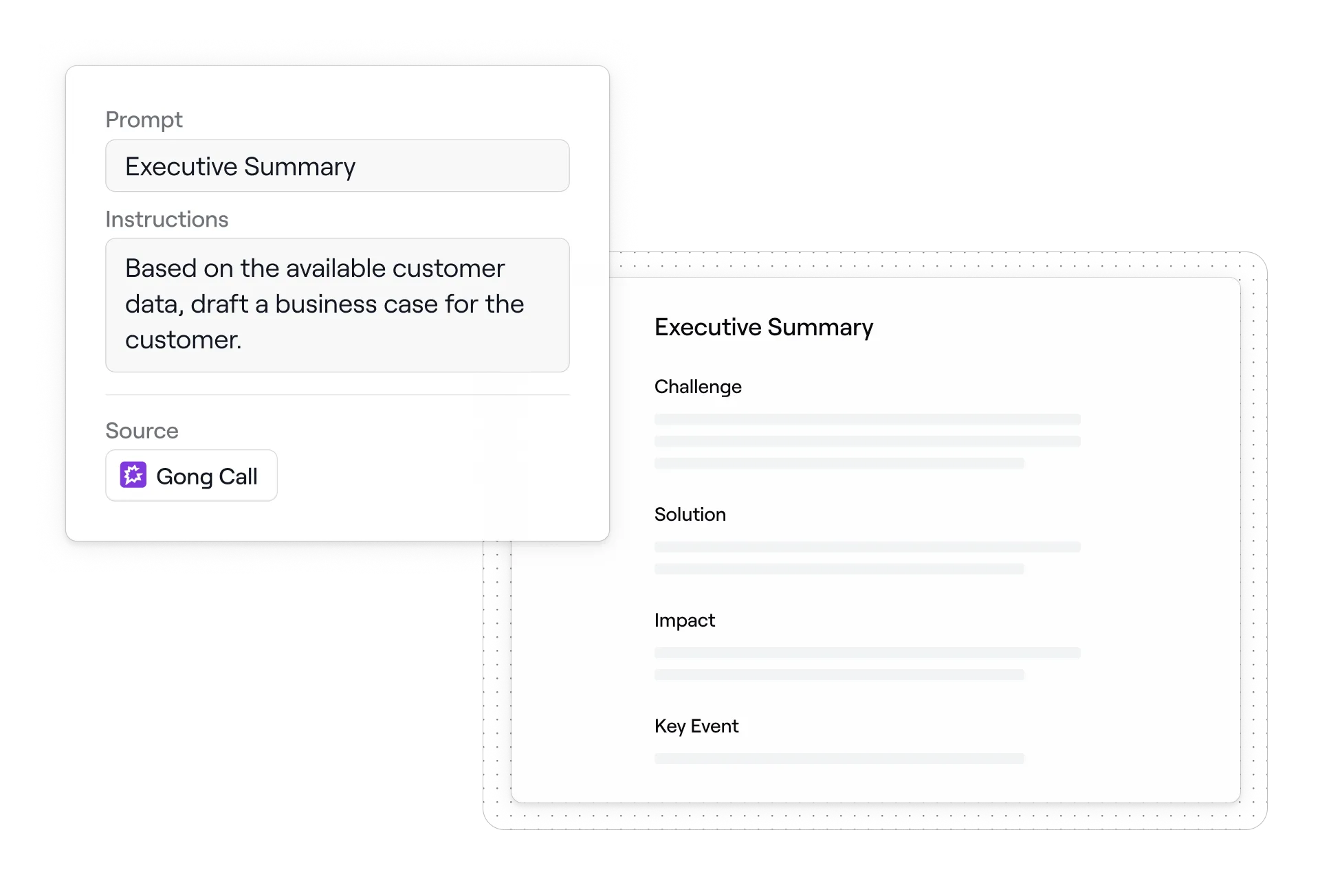
We're not bolting AI onto an old system. Dock was built AI-first to deliver real-time guidance based on your content library, CRM data, and call transcripts. Generate personalized business cases, meeting summaries, and action plans in seconds—not hours. Other platforms are still catching up.
4. Deeper CRM integrations that actually work
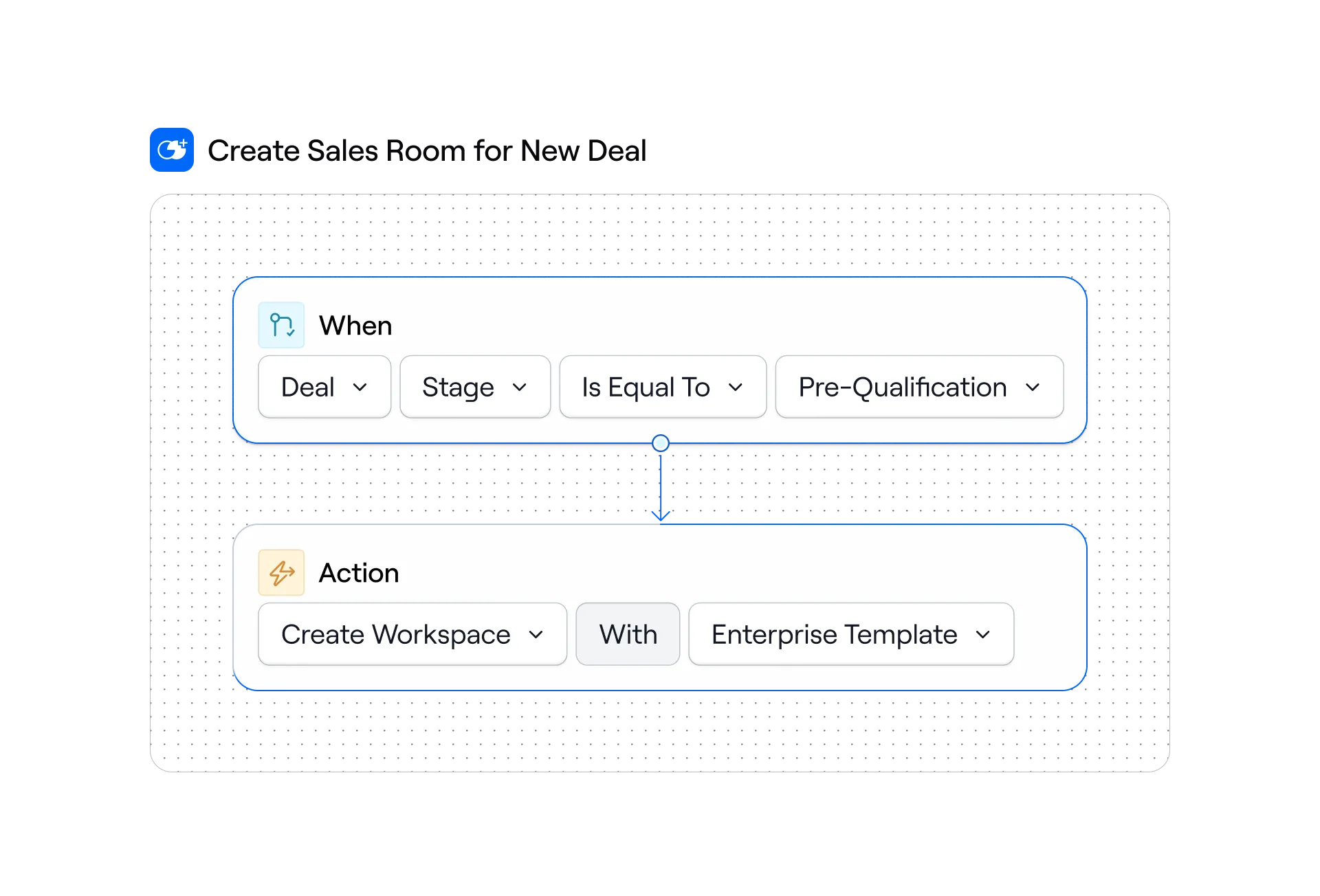
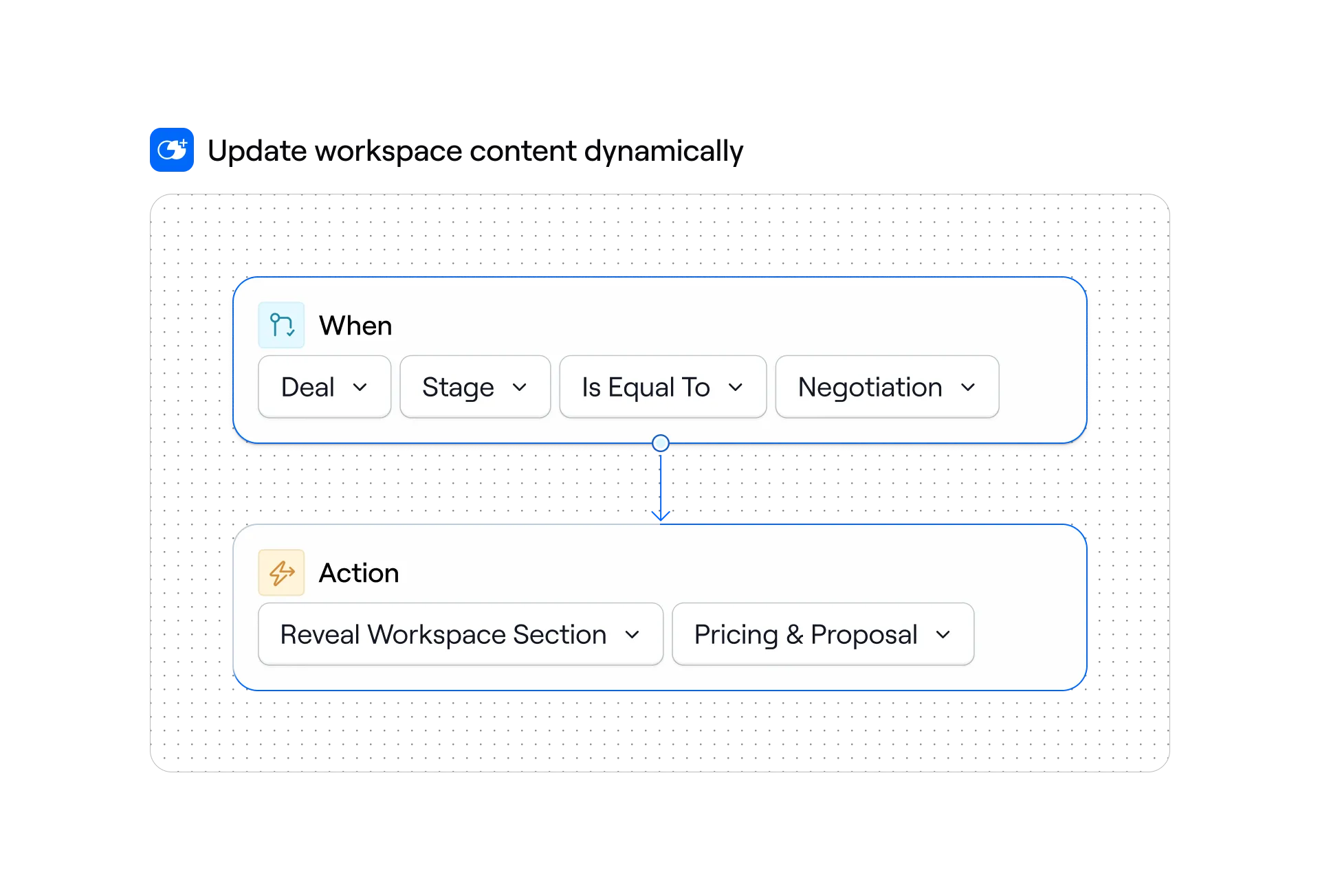
Most sales rooms claim to have CRM integrations, but can't handle two-way syncing of custom fields, real-time dynamic variables, or native automations. Dock integrates deeply with Salesforce and HubSpot to keep workspaces accurate and automate workspace creation based on deal stages.
5. The most flexible, intuitive editor
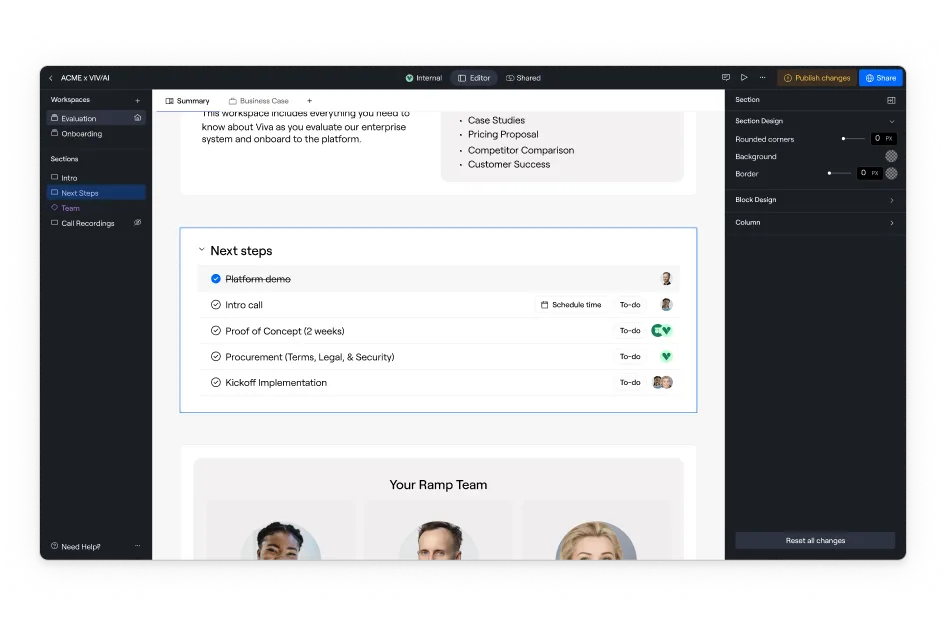
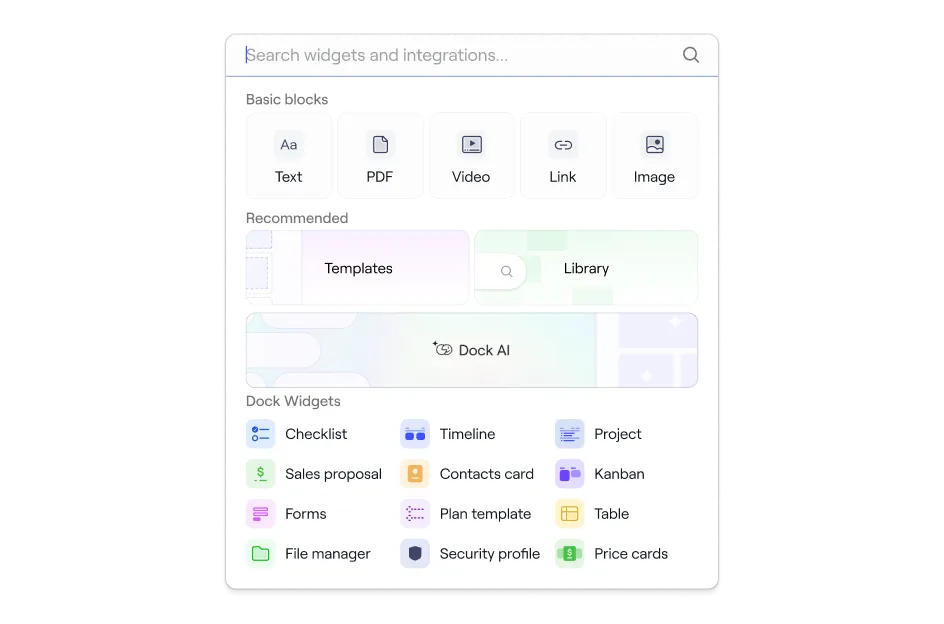
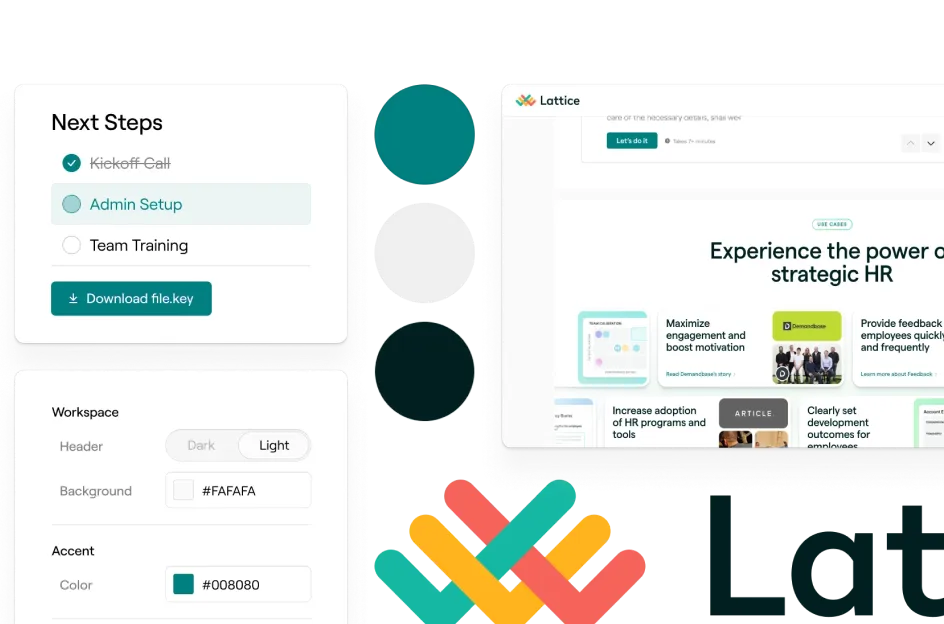
Unlike competitors that force you into rigid templates, Dock gives you complete control over layout, branding, and content. Build workspaces that actually match your sales process—not the other way around.
Yes, Dock offers native integrations with both HubSpot and Salesforce. Both integrations provide comprehensive two-way sync capabilities to streamline your sales and customer success workflows.
With either integration, you can:
- Create workspaces directly from your CRM and automatically populate them with dynamic fields like account names, logos, emails, and key dates
- Push all Dock activity (video views, task completions, link clicks) back to your CRM for complete visibility
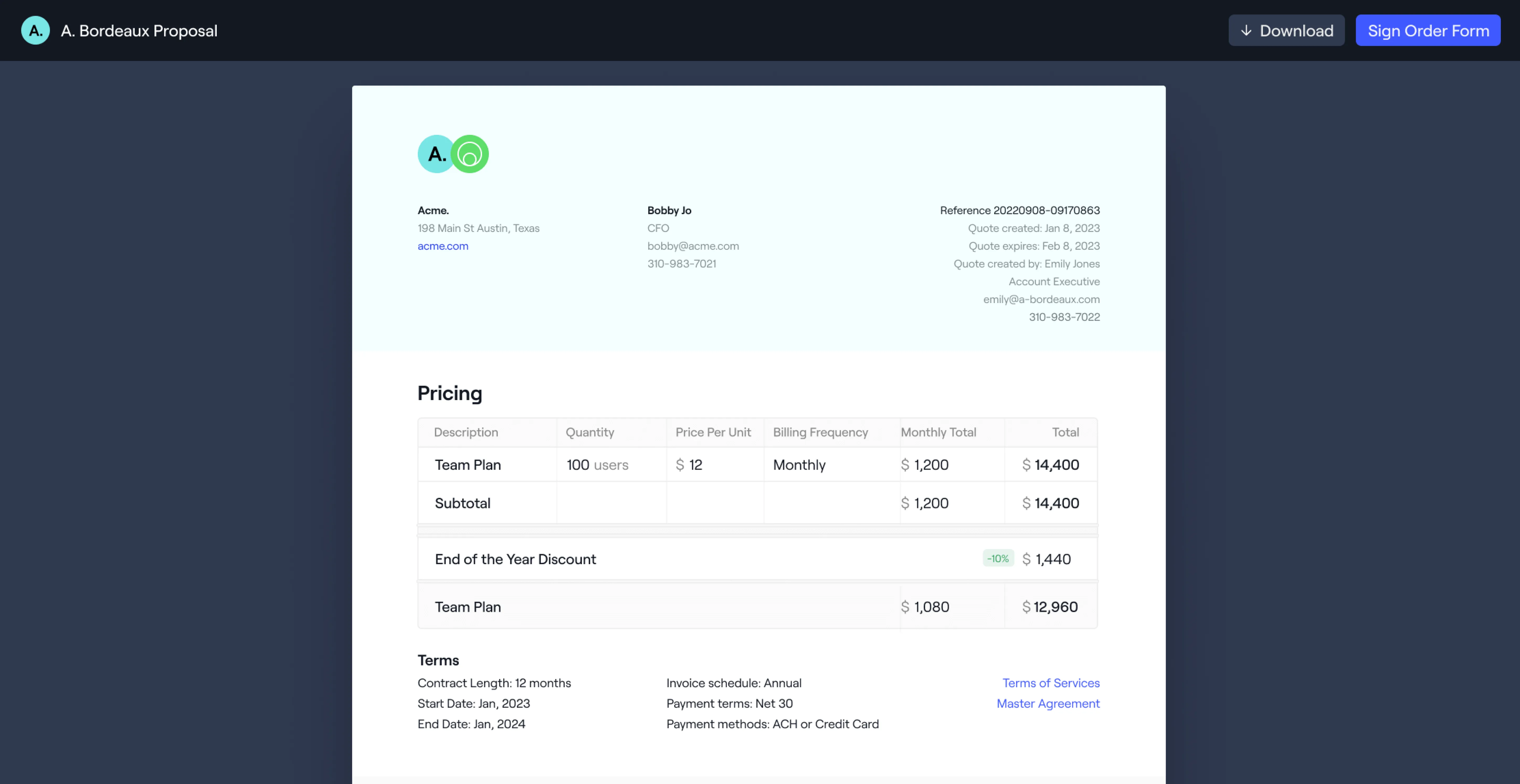
- Sync order forms and line items between platforms
- Track workspace progress and sales/onboarding metrics from within your CRM dashboard
- Automate workspace creation based on deal or opportunity stages
- Maintain CRM hygiene by syncing custom fields and notes directly from Dock
- Use Dock engagement data to enhance lead scoring models and forecasting
The integrations support both sales and customer success use cases, making it easy to build personalized deal rooms during the sales cycle and seamless onboarding experiences post-sale—all while keeping your CRM data synchronized.
To learn more about these integrations, visit our HubSpot integration page or Salesforce integration page.
If you want to send your first sales room today, you can—just pick a template, customize it with your content, and share it with a prospect within a few hours.
But for a full team rollout with CRM integrations, templated workflows, and proper enablement, plan for about 2-4 weeks.
Unlike enterprise tools that take months to implement, Dock's sales rooms fit into your existing process—you're not rebuilding your entire sales motion, just giving your team a better way to execute what they're already doing.
Account executives typically use Dock a few different ways:
Intro/Demo Follow Up: After a call, every AE sends over a long email with too many links and attachments. With Dock, AEs send a single trackable link that hosts all of the sales, marketing, and product collateral.
Enable Champions: Dock helps AEs package everything champions needs to know in one place that can easily be shared with internal stakeholders.
Differentiate from the Competition: Dock makes it easy for AEs to provide a personalized buying experience for prospects.
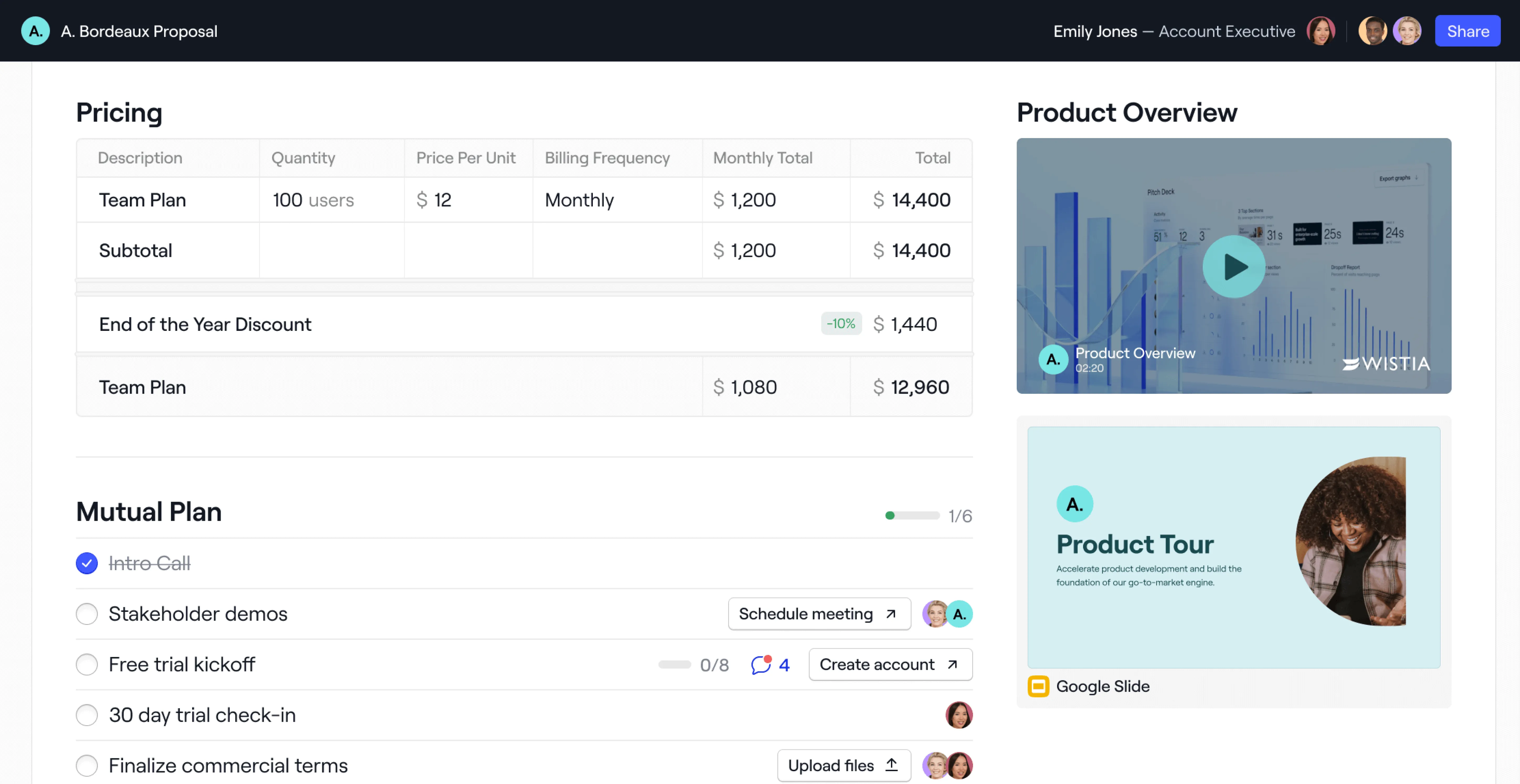
Manage Complex Deals: Dock gives AEs the tools to manage complex deals from mutual action plans, to order forms, to shared notes, to AI-generated content.
Sales Engineers use Dock to manage proof-of-concept projects and pilots, and to get ahead of onboarding during the sales process.
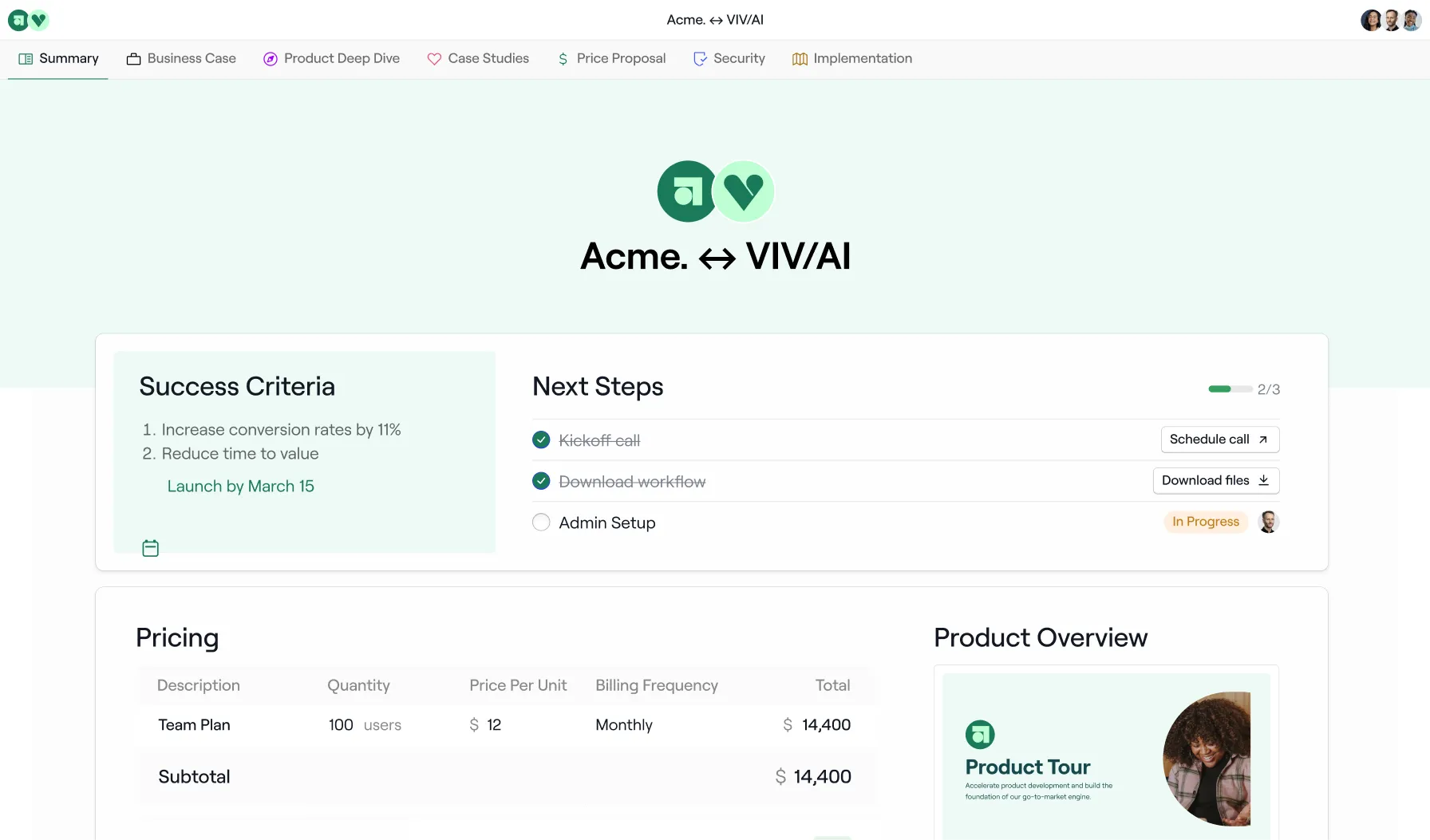
Dock workspaces can be used to store key information like project timelines, product documentation, key stakeholders, success criteria and more. Check out one of our templates to get started.
Sales leaders use Dock to build a repeatable sales process. With company templates, Sales leaders control how Sales reps share information with prospects and make sure everyone is following the right steps to get a deal done.
Dock supports the full range of sales cycles from SMB/transactional to mid-market and enterprise deals. The main difference is the type of template that an AE would use with prospects.
For more transactional deals, AEs use a simple template with basic personalization. For these deals, Dock provides a standard way to share your complete offering with a prospect.
Check out Dock's SMB/Transactional Sales template.
For complex deals, AEs use a more in-depth template with personalized content. For these complex deals, Dock provides tools like mutual action plans to help guide the sales process. And Dock provides a way to share different pieces of content as the sales cycle progresses.
Check out Dock's Enterprise sales template.
Dock helps AEs at PLG companies build the case to senior leadership and IT around why the company needs to upgrade the account. Dock makes it easy to capture product usage, explain the higher tier offering, detail next steps and share customer success stories.
Try Dock's product-led sales template.
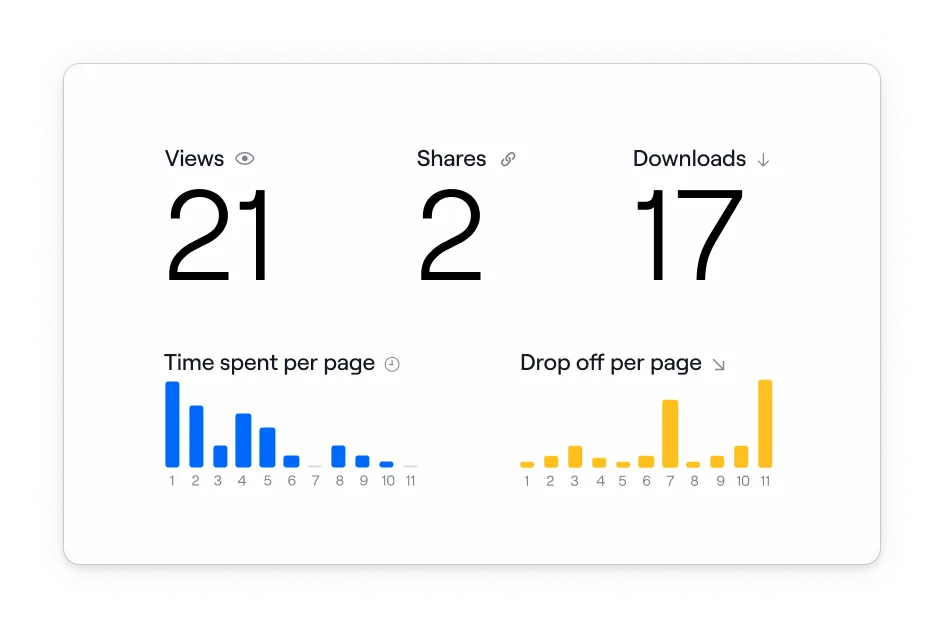
Dock provides the following analytics:
Views: track when someone views a Dock workspace
Clicks: track when someone clicks on a link
Downloads: track when someone downloads a PDF
PDF Time Spent: track how much time someone spends viewing a PDF and time spent per page (soon)
Drop off Report: track which PDF page someone left (soon)
Action Plan Activity: track progress within our shared project plan
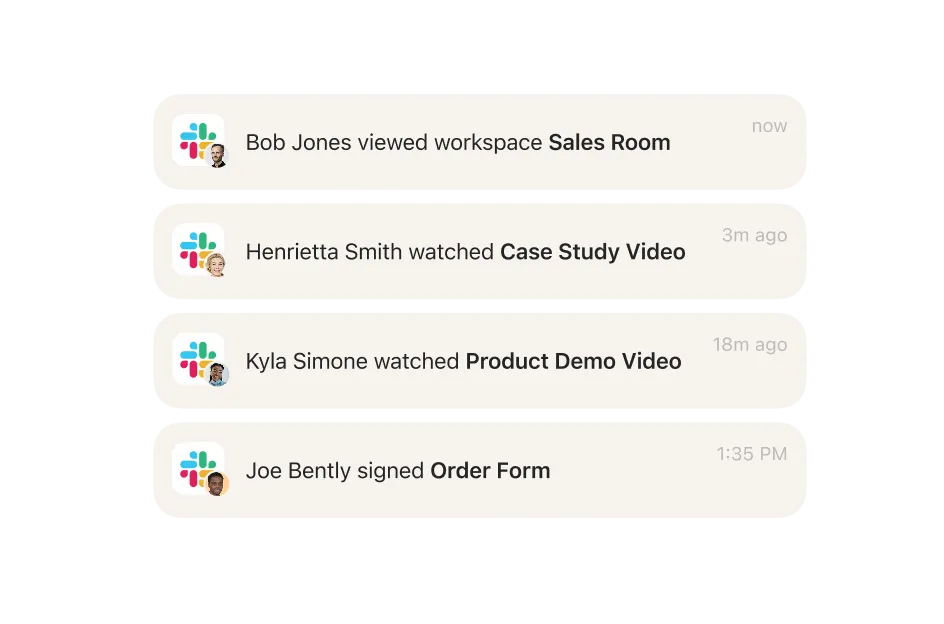
When there’s a new workspace view, Dock will send an email notification to the workspace owner.
Yes. Dock gives sales teams the tools to create and share mutual action plans. Learn more here.
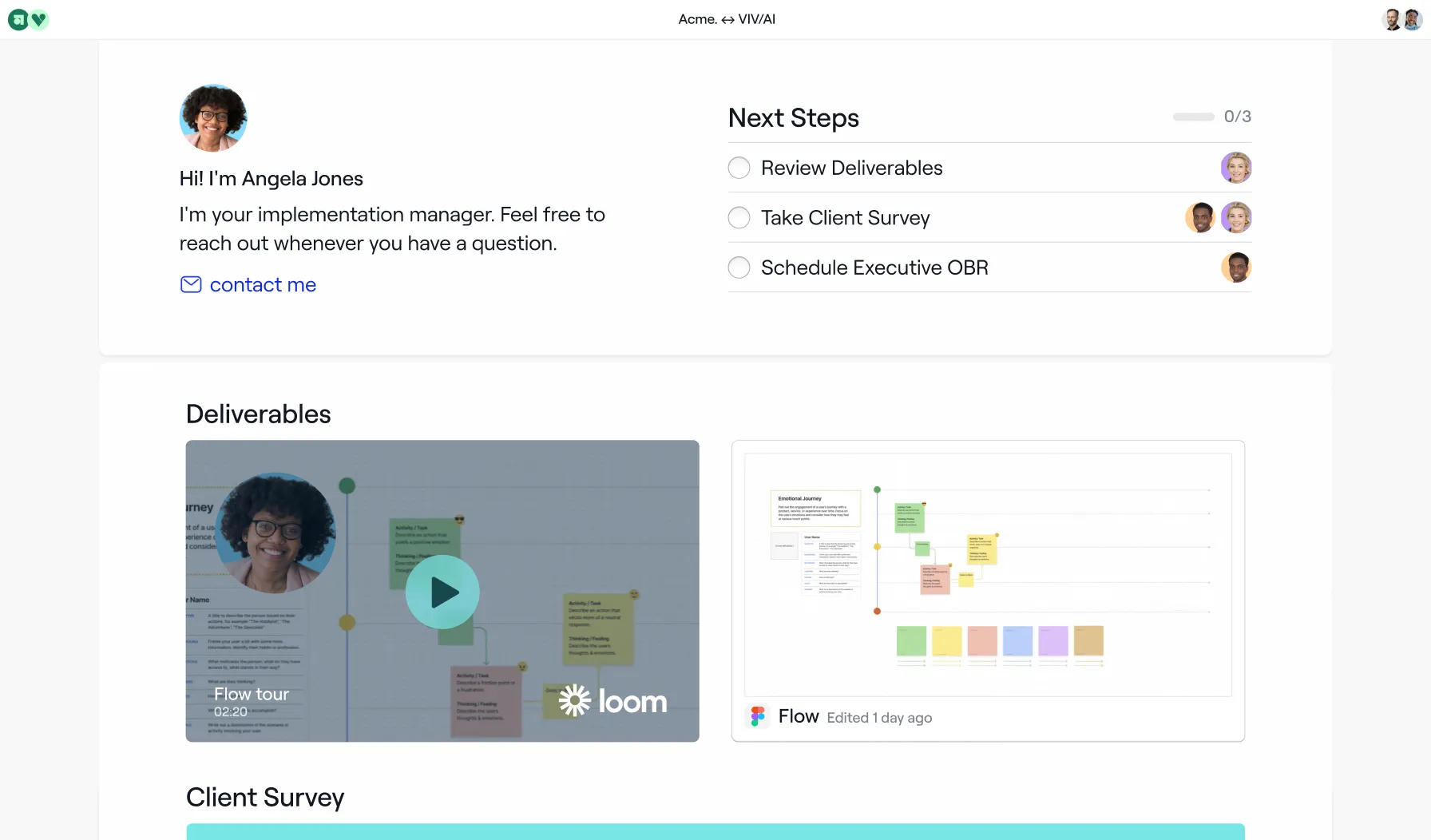
A sales room (also called a digital sales room or sales portal) is a collaborative workspace where sellers and buyers work through a deal together. Think of it as a single, shareable destination where all your deal content lives—proposals, slide decks, security docs, case studies, ROI calculators, video demos, and anything else your buyer needs to evaluate and champion your solution internally.
Unlike scattering content across email threads, Slack messages, and forgotten file shares, a sales room gives both sides a organized hub to reference throughout the sales cycle. Buyers can loop in stakeholders, revisit key materials on their timeline, and move the deal forward without digging through their inbox. Sellers get visibility into what's resonating, who's engaged, and where deals might be stalling.
The result: shorter sales cycles, better buyer experiences, and deals that actually close.
B2B sales negotiations can quickly devolve into a mess of email attachments and Google Doc links that can easily become buried in your email’s inbox.
A digital sales room provides a single, centralized location to store and display all your sales collateral, from product demos and white papers to client testimonials and case studies.
Instead of forcing clients to continually search for materials in email attachments, sales professionals can instead provide a single link to a collaborative and engaging workspace, constantly updated in real-time.
This helps to improve the overall customer experience, allowing your team to close deals more efficiently.
Most sales reps know this reality: buyers spend only 17% of their purchase journey actually talking to sales. The rest of the time? They're researching independently, building internal consensus, and trying to convince stakeholders—often without your help.
A sales room is buyer enablement in action. It gives your buyer champion everything they need to sell your solution internally. Instead of hunting through scattered email threads for that one security doc or the pricing breakdown, buyers get one organized workspace where all the critical materials live. They can loop in their CFO to review pricing, share case studies with their team, and reference your implementation timeline—all on their schedule, not yours.
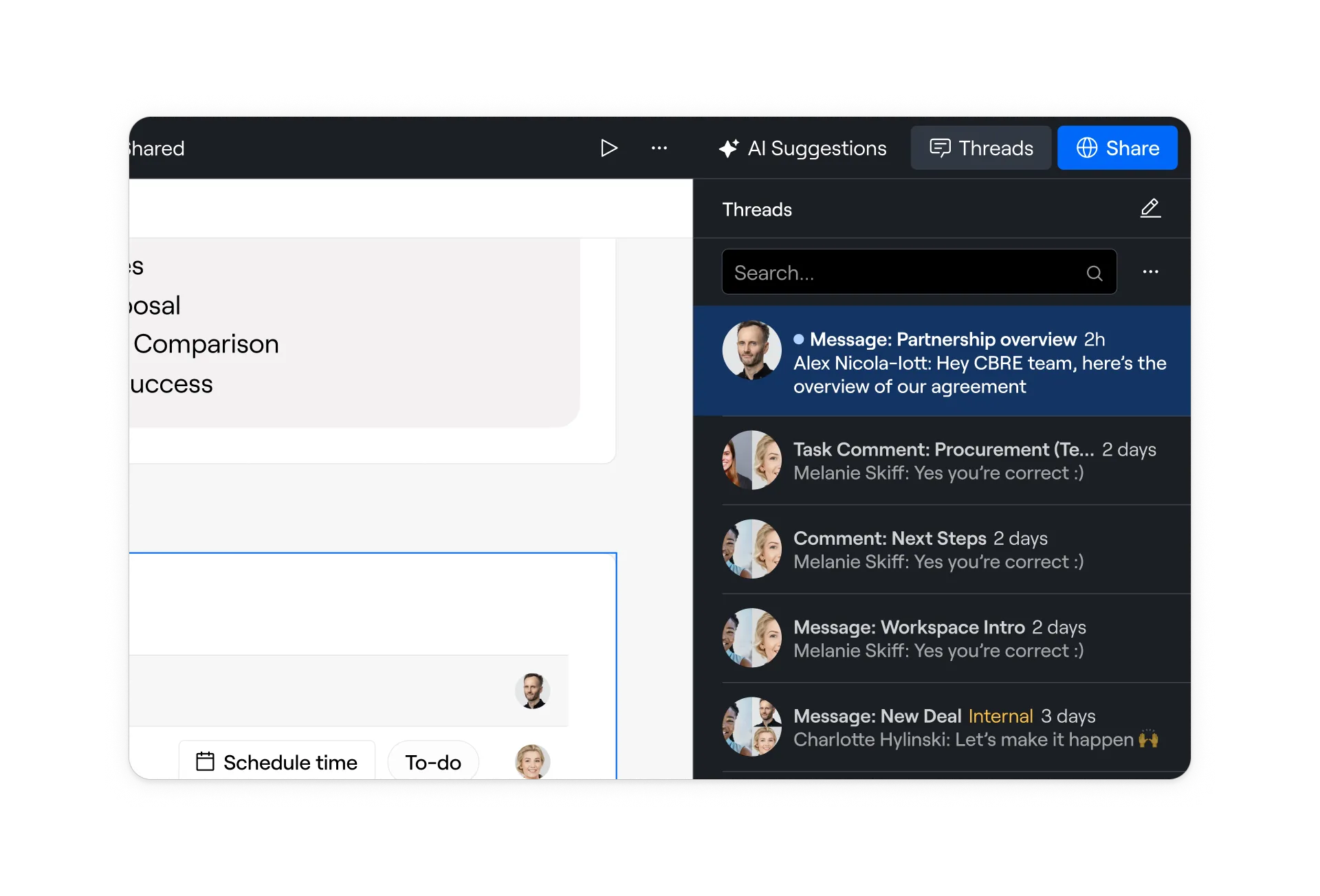
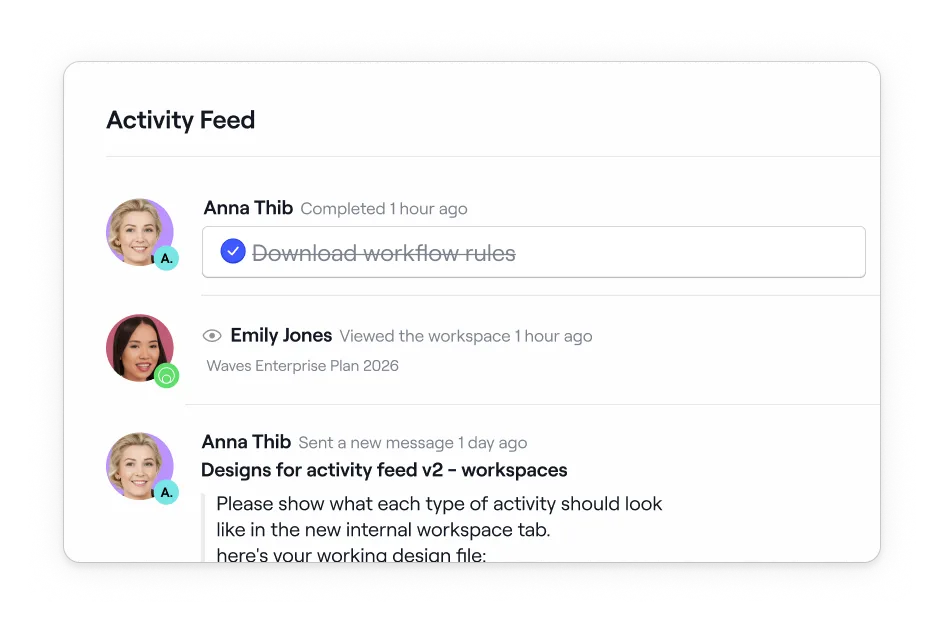
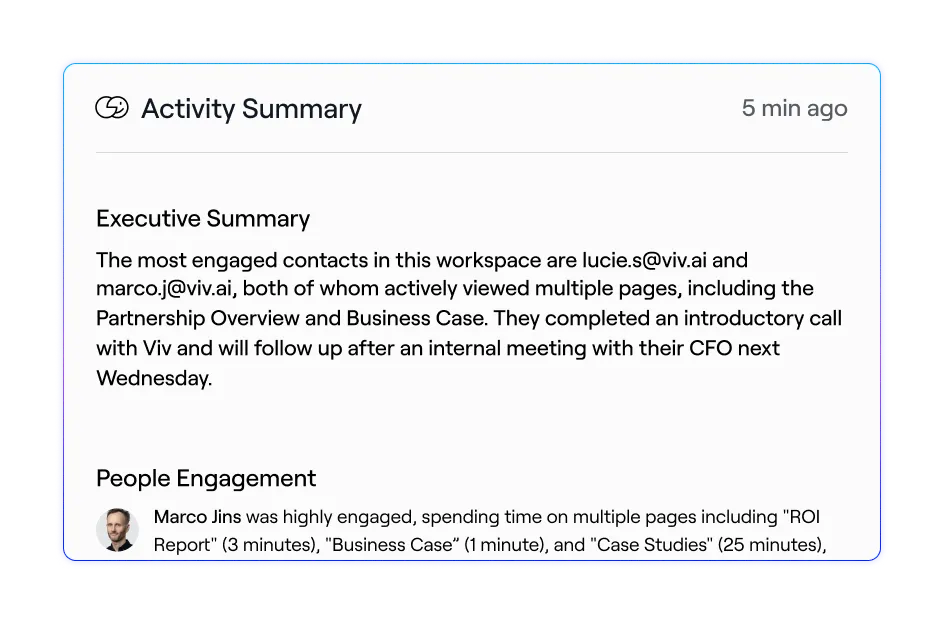
The best part for sellers: you get real visibility into what's actually happening. Dock shows you which stakeholders are engaging, which content they're reviewing, and where deals might be stalling. That "radio silence" from your champion? Now you know if their legal team is deep in the contract or if nobody's looked at your workspace in days.
Sales rooms enable buyers to move deals forward even when you're not in the room—and give you the intelligence to know when to jump back in.
Sales efficiency dies in the busywork—hunting for decks, personalizing proposals from scratch, chasing signatures, manually updating your CRM. Digital sales rooms automate the repetitive work that kills productivity.
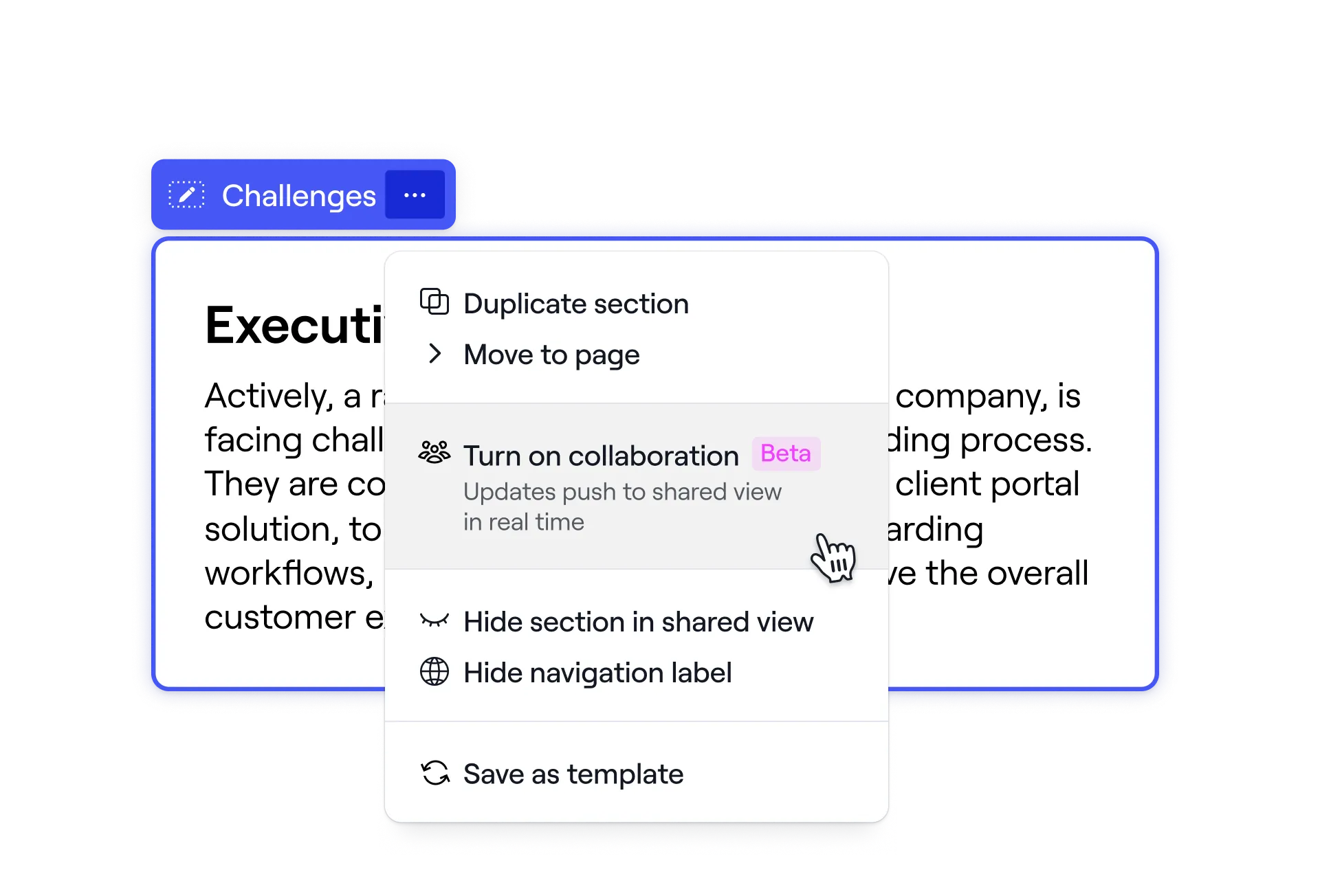
1. Templatize your best rep's process: Build once, reuse everywhere. New reps follow a proven playbook instead of reinventing follow-up from scratch.
2. Automate the manual work: Trigger workspace creation from your CRM. Auto-populate customer data with dynamic variables. Generate personalized content with AI in seconds instead of hours.
3. Stop playing librarian: Give buyers one organized workspace so they find materials themselves. No more "can you resend that?" emails.
4. Focus on real deals: See which prospects are actively engaged and which are going dark. Stop wasting time on stalled deals and double down on the ones with momentum.
5. Close without tool-hopping: Generate quotes, collect signatures, and track everything in one workspace—not scattered across DocuSign, your CPQ tool, and your CRM.
The result: less busywork, more selling. That's why Dock customers consistently higher win rates and greater deal volumes.
Dock is free to try for up to 50 client workspaces. Get started with one of our sales templates.