


.webp)
If you’re evaluating sales enablement platforms right now, you’re probably in one of two situations:
- You’ve outgrown Google Drive and a Notion wiki—reps can’t find content, you can’t track buyer engagement, and deals are stalling because champions have no good way to sell internally; or
- You’re already using Seismic or Highspot, paying enterprise prices, watching your reps ignore it, and spending too much of your own time managing a platform built for a team five times your size.
I ran into the first problem at Lattice. We needed a sensible way to get content into reps' hands, share it with buyers, and let CS carry that context into onboarding. I evaluated Highspot, Seismic, and Showpad—and none of them fit.
They were too bulky, too expensive, and built for organizations far larger than us. We limped along with a wiki and a maze of folders. Eventually, I left to co-found Dock.
What I’ve come to believe since then: the core problem isn’t just the tools—it’s the model. Most sales enablement solutions were designed to store content and train reps. That’s useful, but it’s only half the job.
Today’s buyers spend only 17% of their buying process talking to sales. The rest happens internally—your champion building a business case, procurement doing due diligence, the CFO deciding if you’re worth the spend. Enablement that stops at the rep isn’t really enablement.
That’s what pushed Dock toward AI revenue enablement: one platform for Sales, CS, and Enablement to work with buyers from the first conversation through renewal.
The market has also shifted significantly. Seismic and Highspot announced a merger in February 2026. Showpad merged with Bigtincan. In this guide, I’ll share where each platform stands today—what they do well, where they fall short, and how to choose the right platform for your team.
TL;DR
Choose Dock if you:
- ✅ Want AI-native enablement without the enterprise admin overhead
- ✅ Want to enable buyers, not just train sellers—Dock’s deal rooms, onboarding portals, and renewal hubs are purpose-built for buyer collaboration
- ✅ Want to manage deals, onboarding, and renewals in one platform
- ✅ Are a high-growth startup or mid-market company that needs to move fast
Choose Seismic/Highspot (now merging) if you:
- ✅ Run a large, global enterprise with a full-time admin to manage the platform
- ✅ Need heavy content governance, an enterprise-grade LMS, or built-in conversation intelligence
- ✅ Have the budget for a 3-year contract and timeline for a multi-month enterprise implementation
Choose Showpad if you:
- ✅ Have a field sales team that needs strong offline mobile access and 3D/AR content
- ✅ Operate in manufacturing, life sciences, or medical devices where immersive product demos matter
- ✅ Need EU-compliant data governance and security controls
In summary:
The big differences
All four platforms fall under the revenue enablement software umbrella, but our approaches—and ideal use cases—differ significantly.
Dock
Dock is an AI revenue enablement platform built around three pillars: collaboration, content, and learning. The unifying idea is that enablement should work for the whole revenue team—and for your buyers—not just internal sales reps.
Four things define how Dock is different:
- Buyer enablement and collaboration at the center. Deal rooms, onboarding portals, and renewal hubs that help your champion sell internally—built from the ground up for buyer engagement, not retrofitted onto a content repository.
- Full customer lifecycle in one platform. One platform that unifies Sales, Enablement, CS, Marketing, and RevOps—from first touch through renewal—without switching tools or rebuilding context.
- AI-first enablement. Easy-to-manage templates, AI document generation from live CRM and call data, and automated library management. This isn't a natural-language wrapper for a legacy folder system.
- Built for high-growth revenue teams, not Fortune 500 governance. Fast to implement, high rep and buyer adoption, and designed to generate measurable revenue impact—not to satisfy compliance checklists.
Dock is built for mid-market revenue teams who want real enablement infrastructure without a months-long implementation or Fortune 500 pricing.
Seismic, Highspot, and Showpad
The three incumbents were all founded over a decade ago around the same model—a sales CMS for organizing and distributing content, paired with an LMS for training and coaching reps. They're built for large enterprises, priced accordingly, and take months to implement.
The main differences are in execution, emphasis, and target customer:
- Seismic is the most feature-complete platform in the market—content management, LMS (via its Lessonly acquisition), dynamic content assembly (LiveDocs), AI agents, and conversation intelligence. Forrester has called it "high-investment, high-reward," which is accurate. If you use all of it, it's powerful. Most teams don't, and the complexity creates real adoption problems.
- Highspot built its training and coaching capabilities natively rather than acquiring them, giving it a more cohesive platform than most M&A-assembled competitors. It started as a CMS and built outward, which means content management and search are strong. It also has some of the best conversation intelligence in the category via Highspot Copilot—live call guidance, competitor mention tracking, and AI coaching tied to actual deal data.
- Showpad leans harder into field sales and user experience than the other two. It's particularly strong for industries where reps present physical products in the field—manufacturing, life sciences, medical devices—because of its offline mobile access and 3D/AR content capabilities (significantly expanded via its Bigtincan merger). Among the three, it tends to earn the best UX reviews, though its backend and analytics have historically lagged.
All three have added deal rooms and AI features in recent years—but in each case, those remain secondary to the core CMS and LMS. The deal rooms were built on top of existing content repositories rather than designed from scratch for buyer collaboration. The AI is largely retrofitted onto legacy architectures rather than native.
Where the incumbents genuinely win: Fortune 500 and global enterprises with massive sales forces, complex content governance needs, and the resources to support structured top-down change management programs across thousands of reps. If that's your situation, the depth and breadth of Seismic and Highspot is hard to replicate.
The category is consolidating
The three sales enablement incumbents have all gone through significant M&A recently, and it's worth understanding what that means if you're in an active evaluation or renewal:
- Seismic and Highspot announced a merger in February 2026. The combined entity will operate under the Seismic brand, led by Seismic's CEO. Both platforms continue running independently while the deal clears regulatory review, but the long-term plan is consolidation.
- Showpad completed its merger with Bigtincan in October 2025. The combined company operates under the Showpad brand. Bigtincan brought field sales depth, offline mobile, and 3D/AR content capabilities—genuinely additive for Showpad's ICP. But platform integration is still underway, and PE ownership (Vector Capital) means investment decisions are driven by financial returns.
The consolidation reflects real pressure on the incumbents. If you're evaluating Seismic or Highspot today, you're evaluating a platform in the middle of a merger. If you're an existing customer facing a renewal decision, near-term roadmap uncertainty and potential pricing changes are real risks to factor in.
Now, let's go through each tool in more detail:
1. Dock
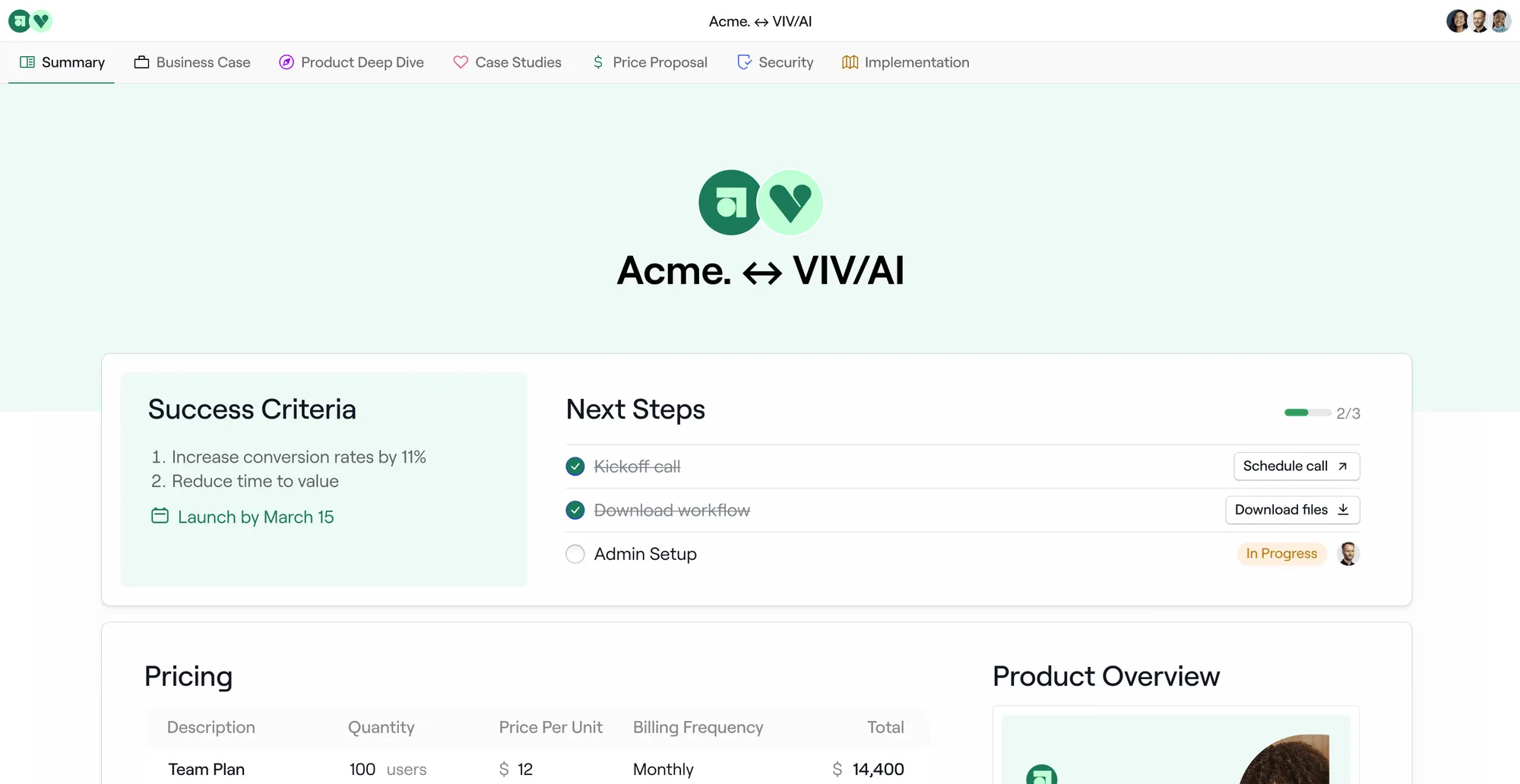
What it is: Dock is the AI revenue enablement platform that provides revenue teams with real-time guidance throughout the entire customer lifecycle.
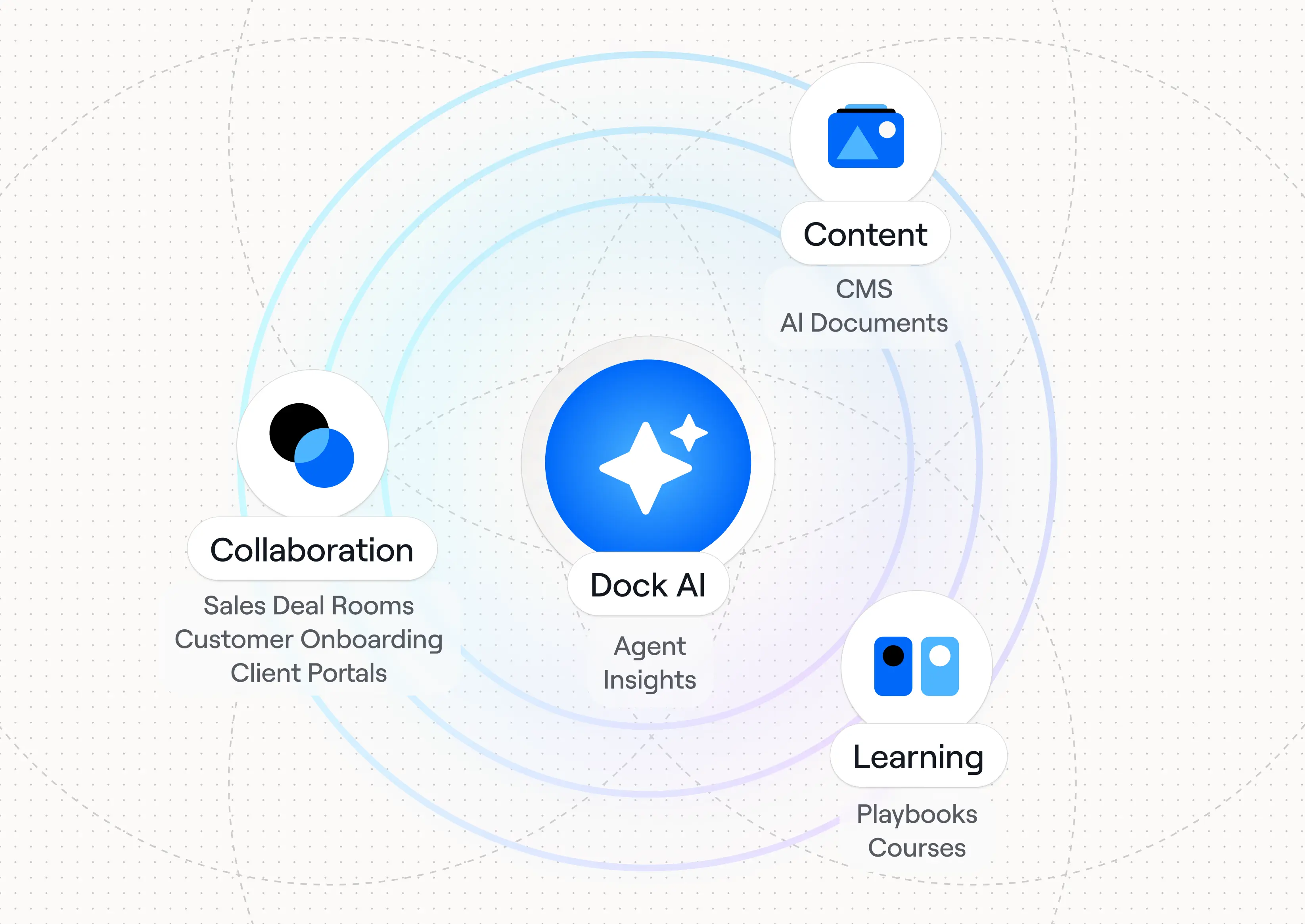
- Collaborative workspaces help sellers and CS teams work with buyers from early deal conversations through onboarding and renewal.
- The content management system keeps sales and customer-facing materials organized and easy to surface.
- Learning management tools deliver courses and playbooks in the flow of work.
- Dock AI ties everything together—automatically organizing content, generating personalized documents, and providing instant answers based on live deal context.
Best for: Revenue teams that want to enable buyers, not just reps—where deal rooms, onboarding portals, and customer lifecycle management are as important as content storage and training. Also the right call if you want AI-native enablement without a months-long implementation or a full-time platform admin, or if external training—educating customers and partners alongside internal reps—is part of your enablement motion.
Pricing: Current pricing available here
- Free plan available (50 workspaces, no time limit).
- Standard starts at $350/month (5 users, workspaces only)
- Premium starts at $1,000/month (10 users, CMS, Playbooks, CRM integrations, and more)
- Enterprise pricing available by request (Courses, SSO, API, custom domain, and more)
- Additional seats at $50/user/month. No implementation fees or professional services required.
What Dock does well
Buyer enablement and collaboration—not just content delivery
Most deals don't die on the sales call because the rep wasn’t knowledgeable enough. They die afterward in '—when your champion has to go sell your solution internally without you in the room.
The goal of a sales enablement tool should be more than just making it easy for your sales team to find content.
- You need to make it easy for your buyer champion to find the content they need to make the case for your solution to the CFO.
- You need to make it easy for your economic buyer to check that your product makes financial sense.
- You need to make it seamless for your customers to see what makes you the best choice, find out how much it will cost them and place an order.
That's the problem Dock is built to solve. Dock’s sales deal rooms give your champion everything they need to carry the evaluation forward on your behalf—a business case drafted from the call, a mutual action plan that keeps both sides accountable, pricing they can share with finance, and answers to security questions before procurement asks.
Instead of "let me get back to you on that," your rep sends a workspace that handles it. And the same workspace carries through to onboarding and renewal—so when a deal closes, CS isn't starting from scratch, and the customer never loses the thread.
Seismic and Highspot have deal rooms too, but they're primarily content repositories. Neither has deep CRM integration at the workspace level—no dynamic fields pulling live deal data, no automation that spins up a workspace when an opportunity hits a stage, no bi-directional sync back to your CRM.
For teams where deal execution is as important as content management, that's a meaningful gap.
Content management and discoverability
Content discoverability is a classic problem for sales enablement teams. The content exists, but reps don’t know how to find it, so it goes unused.
Seismic and Highspot both have search, but they're built on nested folder hierarchies that require significant upfront taxonomy work and ongoing admin maintenance to stay useful. Neither is designed for a rep who has 10 minutes before a call and needs the right asset immediately.
In Dock's content management system, AI tags and describes content automatically at upload. Reps can ask AI for what they need in plain language and get an answer instantly. When Marketing updates a deck, it updates everywhere it's been shared—no broken links, no outdated versions. And because the right content is typically loaded directly into templated workspaces, the search step often disappears entirely.
Seismic and Highspot are powerful content systems, but they require ongoing taxonomy management and dedicated admin time most mid-market teams don't have. Dock handles the busywork automatically.
Sharing the right content with customers, fast
Two other content problems slow deals down.
The first is personalization: after a good discovery call, reps know what matters to the buyer—but turning that into a tailored business case or security response takes time they don't have, so it either doesn't happen or happens generically.
Dock's AI Documents generate these from the actual call—pull in the transcript from Gong, account data from Salesforce, and relevant assets from your library, and Dock drafts a business case, executive summary, or security response specific to that deal. The rep edits and sends rather than writes from scratch.
The second is deck chaos: Marketing builds the perfect presentation, sales customizes it for a customer and saves their own copy, another rep does the same, and six months later there are 40 versions floating around in deals.
Dock’s Slides Remix (coming soon) lets reps create customer-specific presentations using an approved template, while the source remains under Marketing's control. Seismic's LiveDocs addresses a similar problem but is built for enterprise-scale document automation—it’s complex to configure and admin-heavy.
Both Dock features are designed to be fast and rep-friendly.
Training that reps actually use—and that works for customers too
Most sales training happens once, in a course nobody finishes, and then sits on a shelf. Reps don't go back to the LMS when they need an answer mid-deal—they ask on Slack or improvise.
Dock's approach to learning management is to meet reps where they work. Playbooks and courses live in the same tool reps use to run deals. And the AI Enablement Agent is trained on your playbooks and call transcripts, so reps get instant answers, in plain language, without hunting through content.
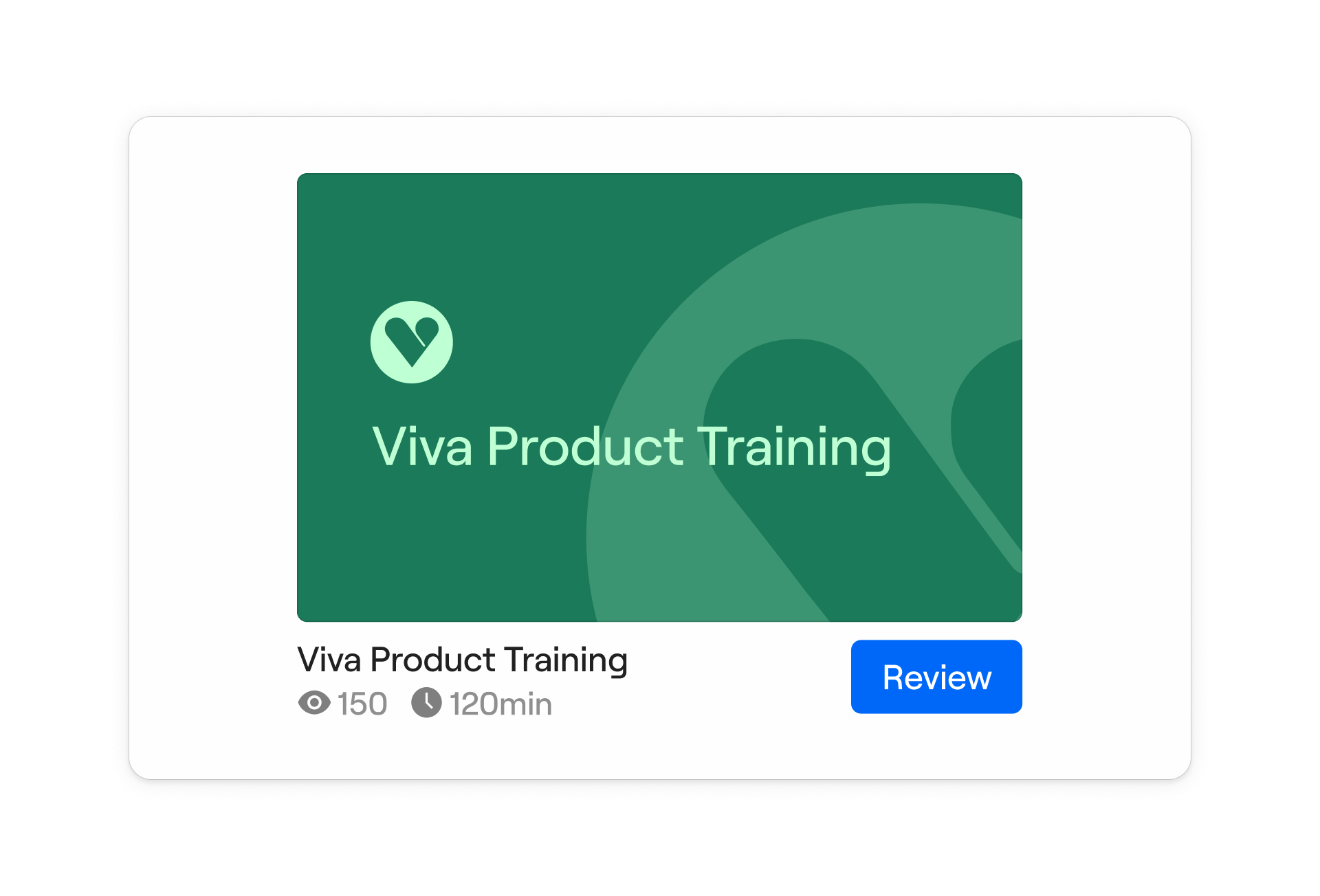
The biggest differentiator in terms of learning management is that Dock allows for external training for customers and partners. Dock lets you embed courses directly in client workspaces—so you can run product education and onboarding training in the same place customers already work. Seismic and Highspot's LMS platforms are internal-only.
The full customer lifecycle in one place
Unlike the other platforms in this article, Dock is built for the entire revenue team—not just sales. Dock workspaces transition from sales to onboarding to renewal without requiring teams to switch tools or rebuild context.
And unlike any of the incumbent platforms, Dock includes real project management capabilities purpose-built for CS: Kanban boards, relative due dates, task automation tied to CRM fields, progress dashboards, and completion reporting. So customer Success actually uses it.
Dock also gives revenue leaders customizable dashboards that combine Dock engagement data with CRM fields—custom views, custom columns, filters by team, stage, or account. Seismic and Highspot both have hard-coded analytics dashboards with no ability to pull in live CRM data. For managers trying to understand deal health across the pipeline without leaving their enablement tool, that's a real limitation.
Dock also includes native order forms with e-signatures (via DropboxSign), a product library for building quotes, approval rules for discounts, and deal desk visibility. None of the three incumbents offers native eSign or order forms—they rely on DocuSign integrations.
Faster product velocity
In the last six months at the point of publishing this article, Dock has shipped major features like AI Suggestions, AI Documents, the AI Enablement Agent, Playbooks, Courses, Synced Pages, and a Chrome Extension. That's the kind of release cadence you get from a focused, independent company with a clear product direction.
Seismic and Highspot, by contrast, are now in the mid-merger stage. Combining two large platforms means rationalizing overlapping feature sets, consolidating engineering teams, aligning roadmaps, and managing customer uncertainty—all at once.
For teams evaluating a multi-year platform commitment, that trajectory matters. Dock's roadmap is moving fast in the areas that matter most for mid-market revenue teams. The incumbents are navigating integration uncertainty that won't resolve quickly.
Where Dock is weaker
Less established in the enterprise
Seismic and Highspot have years of enterprise deployments, deep integration ecosystems, and the compliance and governance infrastructure that large organizations require—complex content approval workflows, version control at scale, audit trails, and global distribution controls.
Dock doesn't have that. If your org needs content governance as a core requirement, or relies on a complex enterprise tech stack—ServiceNow, Workday, SAP—the depth isn't there yet. This rarely matters for mid-market teams, but it's a real gap for large enterprise evaluations.
No native conversation intelligence
Dock doesn't record calls or provide live call coaching. Our philosophy is to integrate with the best-of-breed tools rather than a weaker built-in alternative. Gong, Zoom, Chorus, Fathom, Avoma, and Microsoft Teams all connect natively, allowing you to pull call recordings and transcripts directly into Dock.
The Gong integration goes deepest, allowing you to push customer activity back to Gong. If you absolutely need AI coaching built into the platform, Seismic and Highspot are better options.
AI is strong but narrower than the incumbents' full suites
Seismic's Aura has five specialized AI agents. Highspot's Nexus handles autonomous multi-step workflows. Dock's AI is genuinely useful—content tagging, document generation, AI Enablement Agent—but if you're benchmarking on AI feature count, the enterprise platforms have more surface area.
No mobile app
For field sales teams that need mobile access to content on the road or offline, this is a real limitation. The incumbents all have native mobile apps. Dock is browser-based.

Recent Dock product releases
Last updated March 19, 2026. See here for recent releases.
- Dock Courses / LMS (Mar 2026): Full course builder with quizzes, flashcards, manager review, and learning analytics—embeds into client workspaces for customer and partner training
- AI Suggestions (Feb 2026): AI analyzes call recordings and automatically suggests content assets, action items for mutual action plans, and new stakeholder contacts
- Chrome Extension (Feb 2026): In-browser access to content library, workspace creation, and full AI assistant without switching tabs
- Synced Pages (Jan 2026): Update a page template once and changes propagate automatically across every workspace using it
- Playbooks (Jan 2026): Structured internal knowledge base for onboarding, sales methodology, product launches, and battlecards—built in the same editor as workspaces
- AI Enablement Agent (Oct 2025): Real-time chat assistant grounded in your content library, CRM, and call transcripts—answers rep questions, generates emails, and creates workspaces via chat
- AI Documents (Oct 2025): Generates business cases, executive summaries, meeting recaps, MAPs, and POC plans within workspaces from CRM and call transcript data
- Slides Remix (coming soon): Create customer-specific presentations from Marketing-approved templates—reps customize, Marketing stays in control
2. Seismic
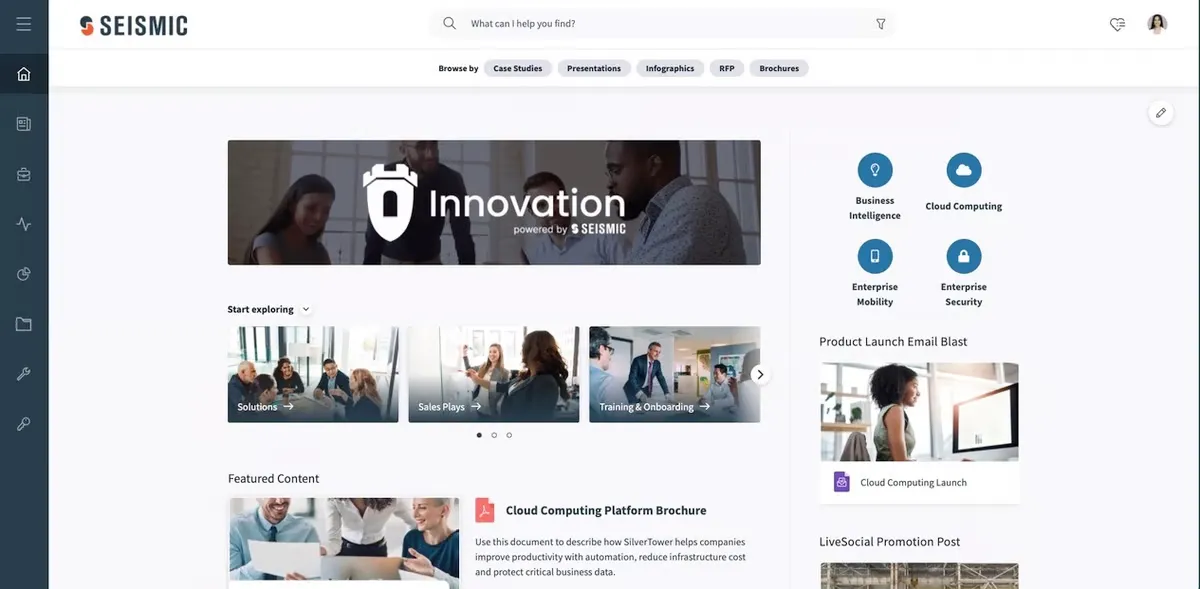
What it is: Seismic is the enterprise sales enablement platform that built the category—starting with content management and personalization, expanding into LMS via the Lessonly acquisition in 2021, and now combining with Highspot in a February 2026 merger.
Best for: Large enterprises (1,000+ employees) with dedicated enablement teams, complex content governance needs, distributed global sales teams, and the budget and timeline to get value from the platform. Seismic excels when you need LiveDocs-level dynamic content, AI roleplay at scale, conversation intelligence, and deep enterprise integrations.
Pricing: Seismic doesn't disclose pricing, but based on our research, typical contracts range from $40K/year for smaller enterprise deployments to $180K+ for large ones. List price is roughly $50–$65/user/month. Professional services typically add $5K–$50K. Expect 4-month implementation timelines and 8–12% annual price escalation unless you lock in a multi-year deal.
What Seismic does well
The most established platform in the market
Seismic has 150+ implementation partners, the deepest enterprise integration ecosystem, and years of deployments at large global organizations. If you're a Fortune 500 company that needs a proven, low-risk platform with extensive professional services support, Seismic is the safe choice. Forrester called it "high-investment, high-reward.” You'll spend more time and money standing it up, but for a large enterprise with the resources and maturity to use it fully, the depth is hard to match.
Enterprise content governance
Approval workflows, version control, compliance tracking, content expiration, and deep audit trails. Essential for regulated industries like financial services, healthcare, and pharma. Not something you need at 200 employees, but critical at 5,000.
LiveDocs is genuinely differentiated—for enterprise scale
Seismic's flagship feature automatically assembles personalized proposals and presentations by pulling live data from your CRM, product catalog, and content library into templates.
Worth noting: Dock is building its own version of this for mid-market teams (Slides Remix, coming soon).
The most complete LMS in the category
Seismic Learning (formerly Lessonly) is a full-featured LMS—courses, learning paths, certifications, AI roleplay, conversation intelligence, adaptive learning, and coaching tied directly to deal outcomes. The Aura Role-play Agent provides AI-simulated buyer conversations with automated scoring. For enterprises building structured, comprehensive rep-readiness programs, this is the deepest offering on the market.
Aura AI agent suite
Seismic has five specialized AI agents: Chat (content Q&A), Role-play (coaching simulations), Presentation (dynamic content assembly), Follow-up (automated post-meeting actions), and Analytics (natural language performance queries). As of right now, they have the deepest AI suite in the enterprise enablement category.
Where Seismic is weaker
May be too complex, even for enterprises
Yes, Seismic has the most features, but that leads to a lengthy implementation. Four-month rollout timelines and a dedicated admin requirement are the norm. The Lessonly integration, while better than many M&A integrations, still produces consistent user complaints about a fragmented experience across modules. This complexity creates real adoption problems: reps who can't find what they need stop looking.
For example, this G2 review says: “Seismic has a lot of products/services — hard to know what's available. Additionally, some products could be better connected into one ecosystem (e.g., LiveSocial, Lessonly).”
The UI hasn't kept pace
Customer reviews consistently flag that Seismic's interface feels dated compared to newer entrants. It feels like you’re using a 10-year-old tool. For sales teams used to modern SaaS tools, this creates friction and drives down rep adoption—which is the one thing a sales enablement platform can't afford.
Not accessible below the enterprise
Getting meaningful ROI out of Seismic requires dedicated enablement ops staff, a significant budget ($40K–$180K+/year), and organizational maturity to support a multi-month rollout. For mid-market teams, Seismic is routinely overkill—and the complexity leads to poor adoption and wasted spend.
That’s borne out by the reviews. For instance, this small business employee says, “Seismic can be quite time-consuming, especially when organizing and tagging a large number of documents. At times, the on-site support for adoption issues was not enough to make sure that the maximum value from the very beginning is achieved.”
Deal rooms are a secondary product
Seismic's digital sales rooms work, but they were clearly built on top of a CMS rather than designed from the ground up for buyer collaboration. Buyers rarely engage deeply with them as they do with purpose-built deal room tools like Dock. If buyer-facing collaboration is your primary use case—not an enterprise-level compliance-heavy content repository—Seismic is the wrong tool.
Highspot merger uncertainty
The Seismic/Highspot merger is the biggest variable in the enterprise enablement market right now. In the near term, it poses real risks: roadmap consolidation, pricing changes, and support disruptions are live concerns for existing customers.

Recent Seismic releases
Last updated March 19, 2026. See Seismic's blog for more recent releases.
- Seismic + Highspot merger announced (Feb 2026): Combined entity under the Seismic brand; both platforms operating independently during regulatory review
- Aura AI Agents Suite expansion (Oct 2025): Five specialized agents across coaching, content, follow-up, and analytics—positioned as the most comprehensive agentic AI in enterprise enablement
- Digital Sales Rooms enhancement (Aug 2025): Improved mutual action plans, enhanced buyer engagement analytics, deeper CRM sync
3. Highspot

What it is: Highspot is the enterprise sales enablement platform that built everything natively—content management, training, coaching, conversation intelligence, and deal rooms all developed in-house rather than acquired and integrated.
Best for: Enterprise teams (500–2,000 employees) that need a unified, natively-built platform across content, training, AI coaching, and conversation intelligence. Highspot's native architecture avoids the integration pain that plagues M&A-assembled competitors. The Nexus agentic AI and Copilot conversation intelligence are standout capabilities. Worth considering for teams at the upper end of mid-market who need more than Dock offers but want to avoid Seismic's complexity.
Pricing: Custom pricing only. Average ACV is ~$90K based on Vendr data. Its list price is roughly $50–$65/user/month. Negotiated deals typically come in at $70K–$120K for mid-market and $150K+ for enterprise. Implementation fees range from $15K to $45K.
Important 2026 consideration: The Highspot product and brand will be absorbed into Seismic. During regulatory review, both platforms are operating independently—but future investment, roadmap priorities, and team consolidation will shift. If you're evaluating Highspot today, you're effectively evaluating an uncertain combined Seismic entity.
What Highspot does well
Native, unified architecture
Highspot built its training and coaching capabilities natively rather than acquiring them. The result is a more coherent integration of content, training, and coaching than competitors have achieved through M&A. Forrester has noted that Highspot customers avoid the "integration pains" that characterize M&A-assembled platforms—until now, with the Seismic merger raising its own integration questions.
Highspot Copilot and Nexus AI
Copilot is a genuinely strong conversation intelligence offering—live call guidance, competitor mention tracking, AI-generated follow-ups, and call recording integrated with the enablement workflow. The Nexus AI agents (reaching GA in late 2025) add autonomous multi-step workflows across content assignment, rep coaching, and follow-up automation. This is more mature agentic AI than most competitors.
Strong AI content recommendations
Highspot's content surfacing—recommending the right asset at the right deal stage based on historical win data—is consistently praised in reviews. Reps spend less time searching and more time using.
Content analytics tied to outcomes
Highspot connects content usage directly to CRM data, showing which assets correlate with won deals. For enablement leaders trying to prove ROI, this is valuable.
Where Highspot is weaker
Expensive, with limited flexibility
Highspot targets mid-market more aggressively than Seismic, but its pricing still demands significant minimum commitments—$91K average ACV, no monthly billing, implementation fees on top. For companies with 200–400 employees who aren't ready for that commitment, it's a heavyweight option where lighter alternatives exist.
Search still over-delivers results rather than the right result
One of Highspot's original differentiation claims was search quality. It's still strong relative to Seismic and Showpad, but consistent user feedback notes that search surfaces too many results rather than surfacing the single most relevant asset. This sounds like a minor UX issue, but in practice, it means reps stop searching and go rogue—which defeats the entire purpose of a content management system.
For example, a review on Gartner by a mid-market Account Manager says:
“In my sales role, I want to find, customize, and share content as fast as possible. Compared to similar platforms, I have a hard time finding what I need with the way we have Highspot set up. It's also too many clicks to get to my own copy of the content that I can edit. There's a million ways to ‘pitch’ the content to customers, but all I care about is a simple link without the desire to track it or get alerts. I think the sharing part could be simplified.”
High implementation complexity
Highspot's native architecture doesn't make the platform simple to manage. Customers report significant upfront configuration requirements, ongoing admin overhead, and difficulty keeping up.
Post-sale is essentially absent
Highspot Rooms are strictly pre-sales tools. There's no post-sale client portal, no structured onboarding project management, and no renewal workspace. If you want buyer collaboration across the full customer lifecycle—not just the deal—Highspot becomes less useful after closed-won.
Merger uncertainty
Same caveat as Seismic: the Feb 2026 merger announcement creates real uncertainty about product roadmap priorities, team structure, and long-term support for existing accounts.
Recent Highspot releases
Last updated March 19, 2026. See Highspot's blog for more recent releases.
- Seismic + Highspot merger announced (Feb 2026): Highspot brand to be absorbed under Seismic; both platforms operating independently during regulatory review
- Nexus AI Agents GA (Nov 2025): Multi-step agentic AI that autonomously assigns content, routes coaching, and triggers follow-up across the enablement workflow
- Highspot Copilot expansion (Sep 2025): Real-time live call guidance, enhanced competitor mention tracking, AI-generated follow-up drafts
4. Showpad

What it is: Showpad is a sales enablement platform founded in Belgium in 2011, focused on content management, training, and field sales tools. In October 2025, Showpad completed its merger with Bigtincan, an Australian platform known for exceptional offline mobile access, 3D/AR content, and strength in the manufacturing vertical. The combined entity operates under the Showpad brand with 2,000+ customers across 50 countries.
Best for: Field sales teams in industries where offline mobile access and immersive physical product demos matter—manufacturing, medical devices, life sciences, pharma. Also, a strong choice for EU-based organizations that need rigorous data compliance. The Bigtincan merger adds significant depth for these specific use cases. Less compelling for modern SaaS GTM teams who don't need offline or 3D/AR capabilities.
Pricing: Custom pricing only. Most organizations pay $50K–$100K/year. ~$35–60/user/month based on community sources. PE-backed by Vector Capital post-merger—pricing dynamics may shift during integration.
What Showpad does well
Offline mobile and 3D/AR content
This is Showpad's clearest differentiation from both Dock and the Seismic/Highspot entity. Field reps in manufacturing, medical devices, and life sciences often present products without reliable internet access. The Bigtincan merger gives Showpad best-in-class offline content delivery and 3D/AR product visualization.
EU data compliance
As a Belgian company operating under EU data regulations, Showpad offers stronger compliance controls than US-based alternatives. For regulated industries and European companies, this is a genuine consideration.
GenieAI Pro
Showpad's agentic AI layer covers content generation, dynamic assembly, meeting prep automation, and coaching recommendations. MeetingIQ handles call recording and conversation analytics, including competitor mention detection.
Intuitive UX
Compared to Seismic and Highspot, Showpad consistently earns the best marks for interface design and ease of use for content discovery.
Where Showpad is weaker
The Bigtincan merger has created real integration complexity
The merger only closed in October 2025. Feature sets from two distinct platforms are still being rationalized, and customer reviews reflect the friction of that consolidation. If you're evaluating Showpad now, you're partly evaluating a platform in the midst of integration—and PE ownership means investment decisions are driven by financial returns rather than product vision.
Analytics and reporting lag behind the market
Showpad's content performance and engagement reporting consistently draws criticism for its lack of granularity. If understanding which assets drive pipeline and closed-won revenue is important to you, this is a meaningful gap—especially compared to Seismic and Highspot's analytics depth.
Deal rooms are the weakest in the group
Showpad's Shared Spaces handle basic content sharing and back-and-forth messaging with prospects. But they're clearly secondary to the backend CMS and training platform. Mutual action plans, project management, and buyer-side collaboration aren't where Showpad has invested.
Not built for modern SaaS GTM teams
Showpad's clearest differentiators—offline mobile content access, 3D/AR product visualization, and immersive field demos—are largely irrelevant to software companies that do web-based demos. If your sales team is running screen shares and Zoom calls rather than in-person product presentations at manufacturing facilities, you're paying for capabilities you won't use.
Recent Showpad releases
Last updated March 19, 2026. See Showpad's help center for more recent releases.
- Genie Assistant (Mar 2026): AI-powered in-platform assistant for finding content, building Shared Spaces, drafting communications in multiple languages, handling objections, and recommending content via conversational interface
- Field Meeting AI (Mar 2026): Expanded meeting intelligence that auto-logs insights and presented content to Salesforce, generates follow-up emails, and recommends follow-up content based on assets shown during calls
- Video Roleplay practice (Mar 2026): Sellers record and review real-time video during roleplay practice, reviewing body language and facial expressions alongside transcripts
- Page Insights (Mar 2026): Detailed analytics for individual Pages—view time, shares, user-level interactions, with side-by-side comparison of up to 4 Pages
- Showpad + Bigtincan merger completed (Oct 2025): Combined entity under the Showpad brand; Bigtincan adds offline mobile, 3D/AR content, and manufacturing vertical depth
How to choose the right platform
So there you have it. To boil it all down to a few takeaways:
- If you're a mid-market SaaS company (100–500 employees, 5–100 sellers), Dock is almost certainly the right call. You get AI-native enablement, buyer collaboration, content management, learning, and the full customer lifecycle in one platform—without a $100K+ annual contract. And our free plan makes it easy to test before committing.
- If you're a large enterprise (1,000+ employees) with complex governance needs, Seismic is a proven option. If you need dynamic content assembly at scale (LiveDocs), AI coaching tied to conversation intelligence, or the most comprehensive LMS, they're hard to beat.
- If you have field sales teams in manufacturing, life sciences, or medical devices who need offline access and 3D/AR product visualization, Showpad is the strongest option in this group.
To try Dock for free, create your first workspace now. Or, if you’d like a personalized demo, you can book a call with our sales team.

Locked into a Seismic or Highspot contract?
If you're facing merger uncertainty, it's worth doing a realistic assessment of what you're actually using in your enablemnet platform. Most mid-market teams use 20–30% of the platform they pay for.
Dock has a contract buyout program for companies looking to switch. Talk to our sales team to learn more.


Related Revenue Lab Articles


_1.webp)



Templates for Sales, Onboarding,
Projects and Portals
Customize and share with clients


