


.webp)
If you're evaluating revenue enablement platforms, you've probably noticed that most comparisons push you toward Seismic or Highspot. They're the incumbents. They have the most features. They dominate the analyst reports.
But here's the problem: those platforms were built for Fortune 500 enterprises with compliance teams, content governance workflows, and budgets to match.
If you're running enablement at a high-growth company with less than 1,000 reps, you don't need that level of enterprise bloat—you need speed, adoption, and tools that actually help your reps close deals.
This guide is designed to help you cut through the noise.
We’ve evaluated nine revenue enablement platforms based on what matters to mid-market teams:
- how fast can you implement it
- whether reps will actually use it
- how it supports the full revenue org (not just sales)
- whether it enables your buyer champions to sell internally.
Here's a quick summary of the tools we'll cover—and what each platform does best.

Our top picks for each use case:
- Dock: For mid-market teams that need real-time AI guidance, buyer collaboration, and full lifecycle support—without enterprise bloat.
- Seismic: For global enterprises with complex content governance needs and large budgets ($100K+ annually).
- Highspot: For mid-market to enterprise teams prioritizing content management over deal rooms or buyer enablement.
- Showpad: For field sales teams that need offline access and immersive 3D/AR content capabilities.
- Spekit: For teams that want just-in-time knowledge delivery surfaced directly in existing tools (CRM, browser).
- Letter AI: For fast-growing teams comfortable with AI-first, less predictable workflows and role-play training.
- Mindtickle: For enterprises focused on rep performance metrics and skill gap analysis over buyer collaboration.
- GTM Buddy: For sales teams that want an AI co-pilot focused on content recommendations and battlecards during calls.
- Gong: For revenue intelligence and conversation analysis—to integrate with your enablement platform.
Revenue enablement features to look for
Revenue enablement platforms typically include some combination of these core features:
- Content management system: Centralized libraries where teams store, organize, and surface sales and customer-facing materials.
- Learning management and training: Courses, certifications, onboarding programs, and playbooks for internal teams.
- Digital sales rooms: Shared digital workspaces where sellers and buyers work together through the sales process.
- Sales coaching: Call recording, analysis, and feedback to improve rep performance.
- Analytics and reporting: Engagement tracking, pipeline insights, and forecasting based on buyer behavior and rep activity.
But what makes a platform "revenue enablement" and not simply "sales enablement" is more cross-functional features that also support Customer Success, RevOps, and other go-to-market teams.
- Cross-functional content: One shared library across Sales, CS, Marketing, and Partnerships—not separate silos.
- Full lifecycle support: Tools that support not just deal execution, but also onboarding, renewals, and expansion.
- Customer success enablement: Training, playbooks, and customer workspaces that help CS teams drive adoption and retention.
- Revenue-wide visibility: Analytics that connect enablement efforts to outcomes across the entire customer journey.
Let’s get to the tools.
1. Dock
G2 Rating: 4.7/5 stars
What it is:
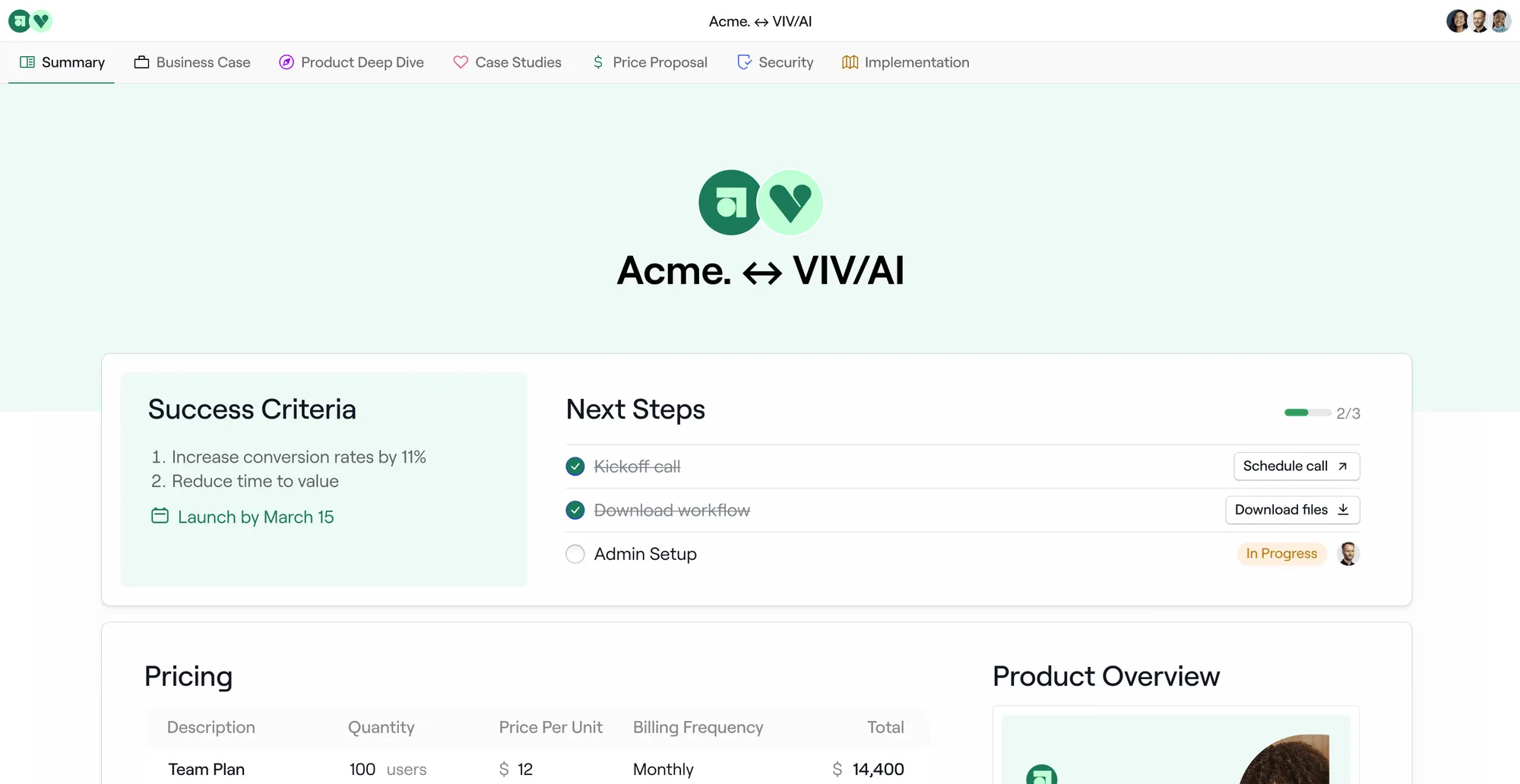
Dock is an AI revenue enablement platform that gives revenue teams real-time guidance across the entire customer lifecycle. It combines collaborative workspaces, AI-powered content management, and learning tools—built for mid-market teams focused on creating the best possible buyer experience.
What it does well:
Dock solves the two biggest problems with legacy enablement platforms: reps won't use them, and they don't help buyers.
Unlike content-first tools like Seismic and Highspot, Dock is built around buyer collaboration.
Sales deal rooms give your champion a single place to review content, align stakeholders, and track next steps—so deals keep moving even when you're not in the room. These workspaces seamlessly transition into onboarding hubs and customer portals, eliminating the messy handoff between Sales and CS while delivering a consistent customer experience from evaluation through implementation.
Dock AI delivers enablement in the flow of work. Instead of making reps hunt through folders or wait for enablement to respond, the AI Enablement Agent surfaces the right content, generates personalized follow-ups, and answers product or competitive questions instantly—using your CRM data, content library, and call transcripts.
Implementation takes days or weeks, not months. Reps actually use it because it's intuitive, tracks customer interactions, and helps close deals faster. Enablement teams love it because automation and AI reduce the busywork—auto-tagging content, generating personalized documents, and surfacing the right assets—so enablement teams can focus on strategy instead of manual upkeep.
What it doesn’t:
Dock is purpose-built for mid-market SaaS companies (5-200 sellers). If you need enterprise-grade governance workflows, multi-layer approval chains, or compliance audit trails for a 5,000-person sales org, legacy platforms are better suited for that level of overhead.
We're still growing the platform. A full LMS with courses will launch at the end of Q1 2026.
But unlike legacy tools that bolt on features to justify their price tags, we ship capabilities that solve real problems—without the feature bloat or technical debt that kills adoption.
Major features:
- Sales deal rooms: That actually work for buyers and sellers—mutual action plans, quotes, order forms, and all your content in one shared workspace instead of scattered across email threads.
- AI Enablement Agent: Gives reps instant answers to product questions, recommends the right content for each deal stage, and suggests next steps based on what's actually happening in the conversation.
- AI Documents: Generate personalized proposals, business cases, and follow-up emails using your CRM data and call transcripts—so reps spend less time writing and more time selling.
- Content Management System: Dock’s AI-powered CMS auto-tags assets, surfaces relevant materials based on deal context, and keeps your library clean without manual upkeep.
- Engagement Insights: Show which stakeholders are active, what content they're viewing, and whether deals are gaining momentum or stalling.
- Customer onboarding workspaces: Eliminate the sales-to-CS handoff chaos with implementation plans, project tracking, and everything customers need in one place.
- Learning Playbooks: Training workspaces to onboard reps, standardize sales best practices, share product launches or changes, and more.
- Deep CRM integrations: Two-way sync with Salesforce and HubSpot to pull deal data, update records, and keep systems aligned.
Best for: Mid-market SaaS teams that need to enable both their reps and their buyer champions. Ideal if you're running complex sales cycles where buyers spend most of their time researching and building consensus offline—and you need a platform that keeps deals moving even when you're not in the room.
Pricing: Free for individuals and small teams; $350/month for up to 5 users; $750/month for 10 users. Enterprise pricing available upon request.
2. Seismic
G2 Rating: 4.7/5 stars
What it is:
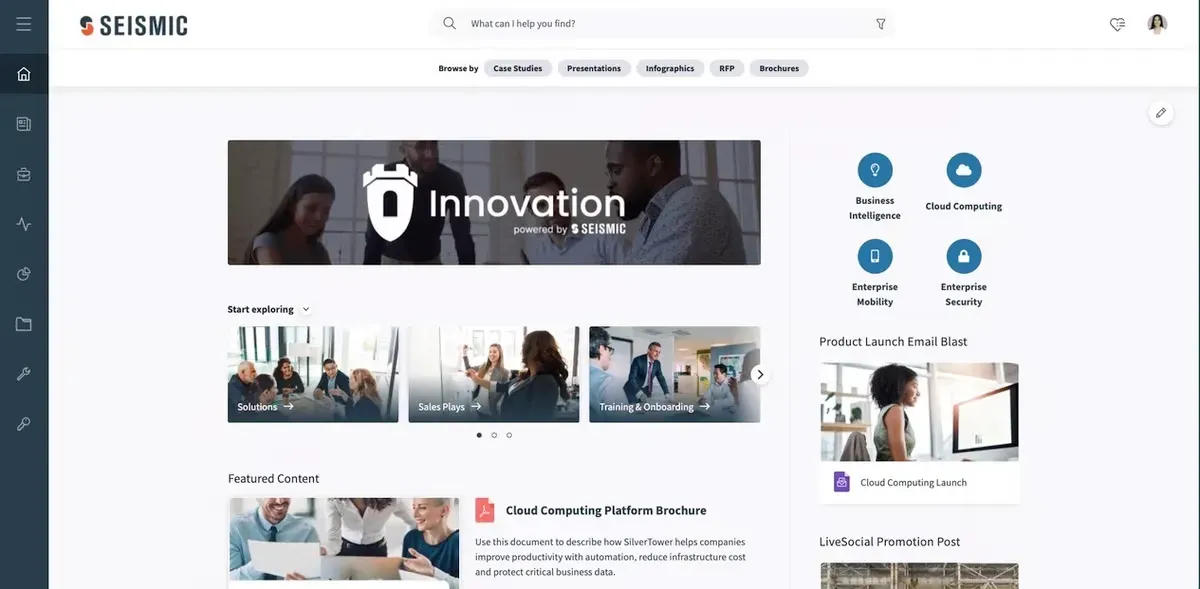
Seismic is a legacy enterprise sales enablement platform built around content management, governance, and compliance. It includes a CMS, LMS, coaching tools, meeting intelligence, and lightweight digital sales rooms—all designed for large, distributed sales organizations.
What it does well:
Seismic was built for Fortune 500 companies that need strict content control. If you have a 500+ person sales org, legal approval workflows, regional compliance requirements, and multiple product lines that need version control and audit trails, Seismic has the infrastructure to support it.
The platform excels at content lifecycle management: permissions, approvals, governance, and ensuring every rep has access to the latest on-brand materials. For global enterprises with dedicated content ops teams, this level of control is essential.
What it doesn’t:
Seismic's biggest strength is also its biggest weakness. The platform is built for enterprise governance—which means complexity, heavy admin burden, and slow implementations (often 6+ months). For mid-market teams, this overhead rarely justifies the cost.
The deal room functionality is basic compared to purpose-built collaboration tools. Seismic's sales rooms feel like an add-on to the core CMS, not a true buyer collaboration experience. Reps report low adoption because the platform is clunky and requires constant training to navigate effectively.
AI features feel bolted on rather than native. While Seismic has added AI-powered search and recommendations, it's layered onto a system designed for static content management—not real-time guidance.
Major features:
- Enterprise-grade content management with approval workflows and compliance controls
- Learning management system with certifications and courses
- Conversational intelligence and call coaching
- Content customization and dynamic document generation
- Basic digital sales rooms
- Global infrastructure and security
Best for: Global enterprises (500+ sellers) with complex product catalogs, strict compliance requirements, and dedicated enablement/content ops teams to manage the platform.
Pricing: Contract minimums start at around $50K annually for mid-market and $100K+ annually for enterprise.
3. Highspot
G2 Rating: 4.7/5 stars
What it is:
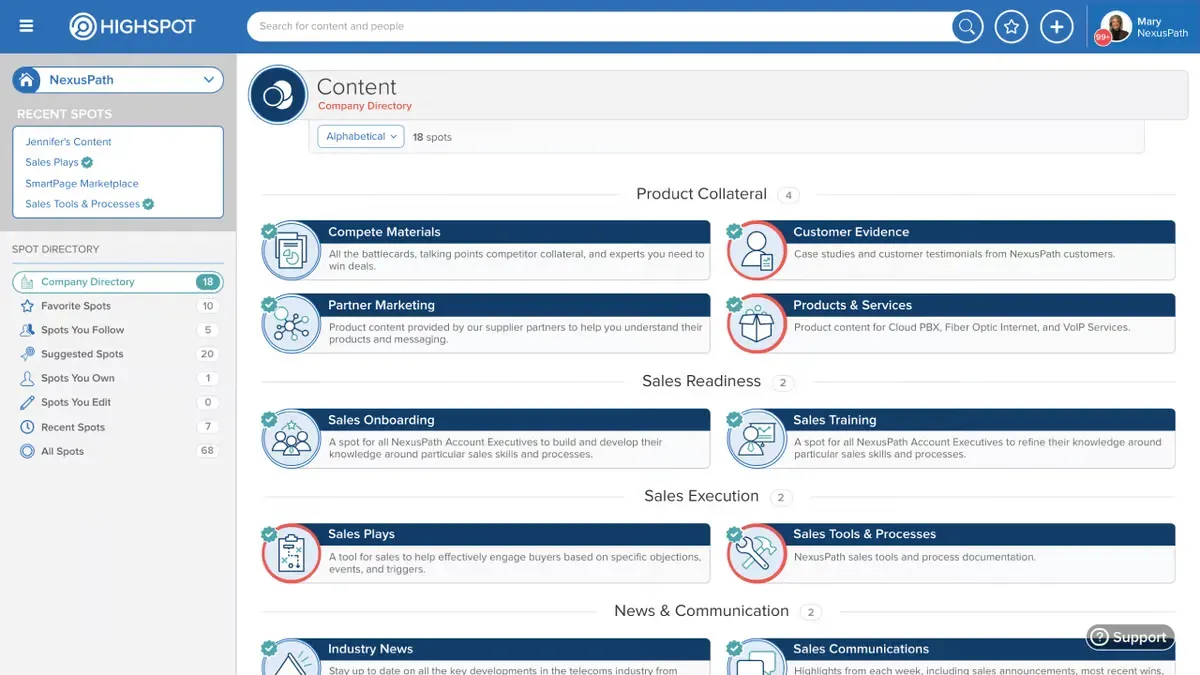
Highspot is another legacy sales enablement platform that checks all the boxes for large GTM teams: content, coaching, insights, learning, and AI agents to turn data into meaningful action.
What it does well:
If your primary pain point is "reps can't find our sales collateral," Highspot solves that better than most. Highspot's content management and search are widely regarded as industry-leading. The platform excels at helping reps find the right asset quickly through AI-powered search, usage analytics, and content recommendations.
The native-built approach means fewer integration headaches and a cleaner data model. Everything lives in one system, which makes implementation smoother than Seismic's patchwork of acquired tools. Reps tend find it more intuitive once they're trained—though that training still requires significant time investment.
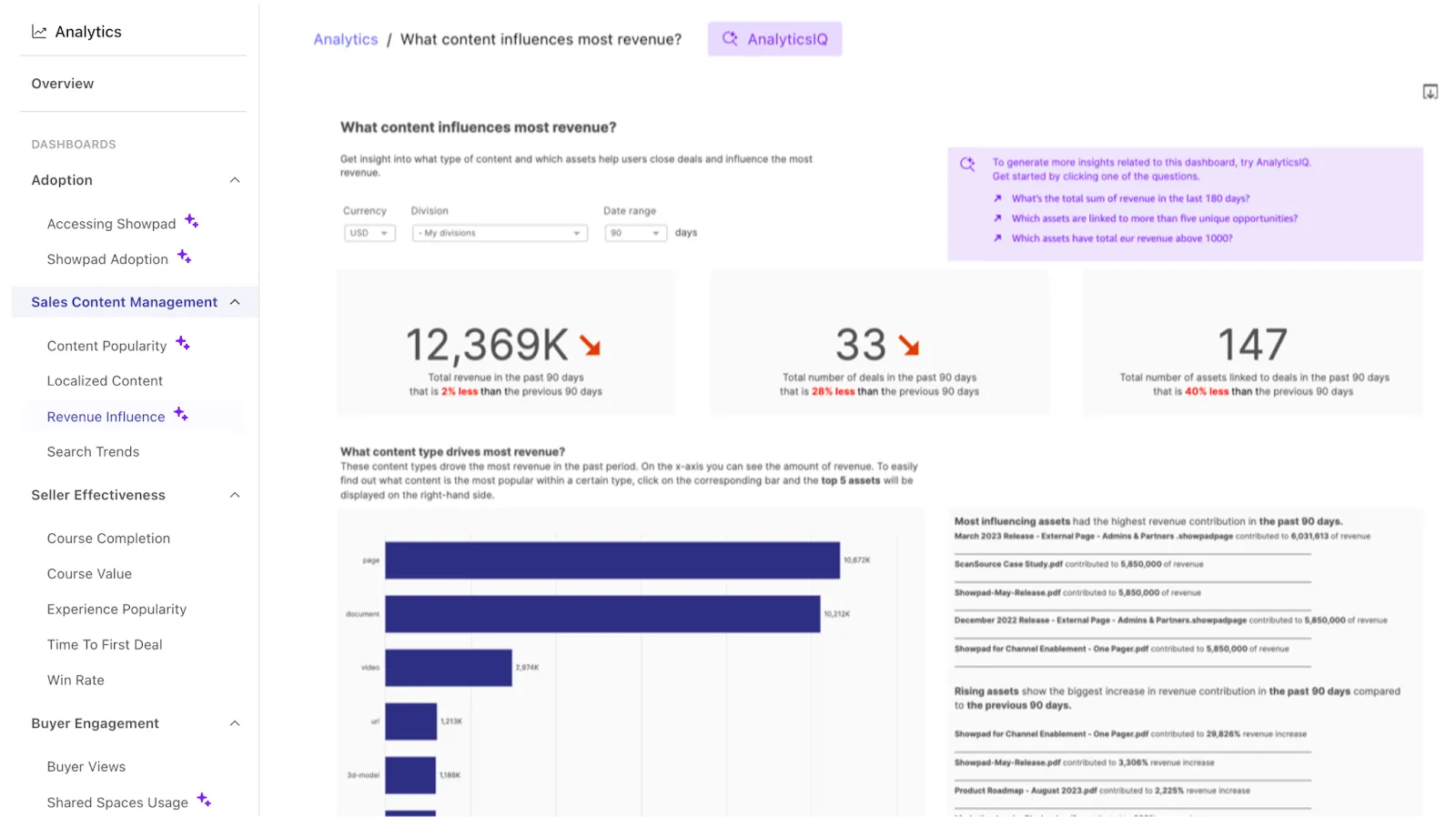
Highspot also delivers strong analytics on content performance. Enablement teams can see which assets drive engagement, which go unused, and where reps struggle to find resources.
What it doesn’t:
Highspot's deal rooms are underwhelming. They're functional but basic—more like "content sharing portals" than true buyer collaboration workspaces. There's limited customization, weak project management capabilities, and minimal buyer engagement tracking compared to purpose-built sales room tools.
The LMS is similarly bare-bones. It handles basic course delivery and tracking, but lacks the depth that dedicated learning platforms offer. If training and coaching are core to your enablement strategy, you'll likely need supplemental tools.
Highspot is expensive and still requires heavy lifting. Despite being more intuitive than Seismic, you're still looking at $50K+ annual contracts, months of implementation, and ongoing admin work to maintain content libraries and permissions. For mid-market teams with lean enablement staff, this overhead is hard to justify.
Major features:
- Advanced content search with AI-powered recommendations
- Content performance analytics and usage tracking
- Sales plays and guided selling experiences
- Conversational intelligence with Gong integration
- Basic digital sales rooms (limited customization)
- Lightweight LMS for training and certifications
Best for: Mid-market to enterprise teams (50-500 sellers) where the primary problem is content chaos—reps can't find assets, content is scattered, or you need strong governance and analytics around what content actually works.
Pricing: Contract minimums around $50K annually; roughly $50-60 per user per year.
4. Showpad
G2 Rating: 4.6/5 stars
What it is: Showpad (recently merged with Bigtincan) is an enablement platform built for field sales teams that need offline access and mobile-first content delivery. It focuses on helping distributed reps present and share materials on any device—especially during in-person meetings or trade shows.
What it does well:
Showpad's core strength is offline functionality. If your reps are regularly in situations without reliable internet—manufacturing plants, healthcare facilities, trade show floors—Showpad lets them download and present content without connectivity issues.
The platform also supports immersive content formats like 3D models and AR experiences, which is valuable for companies selling physical products or complex technical solutions that benefit from visual demonstrations.
Mobile experience is genuinely prioritized, not just an afterthought. Reps can access, customize, and present materials from tablets or phones as easily as from desktops.
What it doesn’t:
Content management is clunky. Users report that organizing assets, finding the right content, and managing permissions is more difficult than it should be. Load times can be slow, especially with larger files or media-rich content.
Digital sales rooms are basic with limited customization. If buyer collaboration is important to your sales process, Showpad's deal rooms won't compete with purpose-built tools. They're functional for content sharing but lack robust project management, mutual action plans, or deep buyer engagement tracking.
The Bigtincan merger has created some product uncertainty. Customers have reported confusion about product roadmaps and which features will be consolidated or deprecated as the two platforms integrate.
Major features:
- Offline content access and presentation
- Mobile-optimized content delivery
- 3D and AR content support for product demonstrations
- Sales content management and creation tools
- Rep training and coaching capabilities
- Basic digital sales rooms
Best for: Companies with field sales teams (manufacturing, medical devices, industrial equipment) that need offline access and immersive product demonstrations during in-person meetings.
Pricing: Estimated $30K+ annually
5. Spekit
G2 Rating: 4.7/5 stars
What it is:
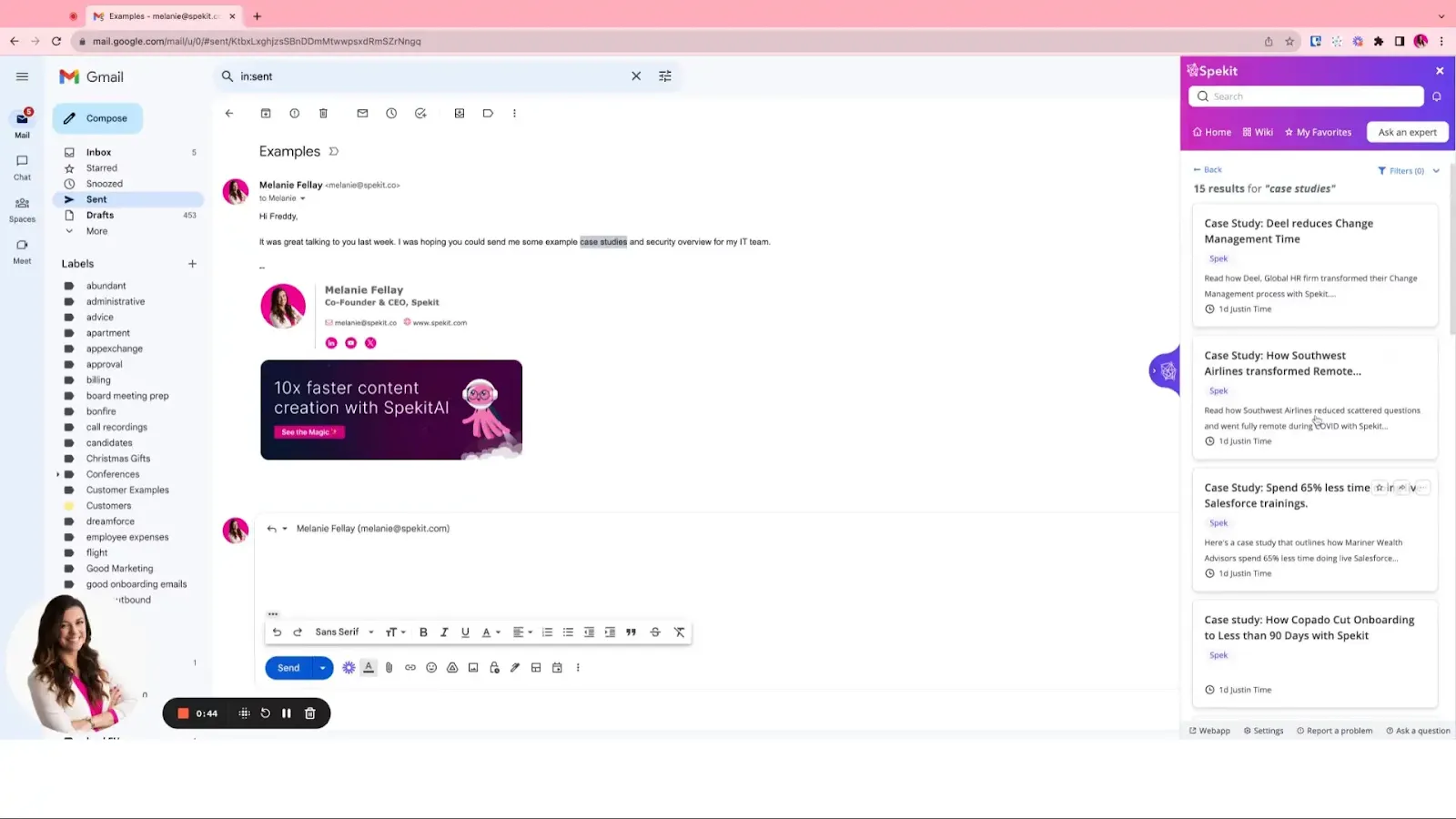
Spekit is a “just-in-time” enablement platform that surfaces knowledge, content, and training directly inside the tools your team already uses—CRM, email, browser—rather than requiring reps to switch to a standalone platform. It recently added deal rooms to expand beyond knowledge delivery.
What it does well:
Spekit primarily solves the "scattered knowledge" problem. Instead of forcing reps to hunt through Slack, Google Drive, wikis, and enablement platforms, Spekit brings answers to them through a Chrome extension, in-app overlays, and AI Sidekick that surfaces contextual guidance wherever they're working.
The platform excels at reducing context switching for high-volume, repetitive tasks. SDRs, support teams, and ops get fast answers to common questions without leaving Salesforce or their inbox. Setup is relatively fast—weeks, not months—and the lightweight approach results in less administrative overhead than full enablement platforms.
AI Sidekick analyzes call transcripts and CRM context to proactively recommend content, suggest messaging, and provide coaching without reps needing to ask.
What it doesn’t:
Spekit's deal rooms are a recent addition and aren't as developed as purpose-built collaboration tools. They're functional for basic content sharing and tracking buyer engagement, but lack the customization, project management depth, and seamless lifecycle transition (sales to onboarding to renewal) that platforms like Dock offer.
The Chrome extension dependency limits flexibility. If your team works primarily on mobile, uses non-browser tools, or has strict browser extension policies, Spekit's core functionality won't work as well.
And while Spekit helps reps find answers faster, it's primarily rep-focused, not buyer-focused. It doesn't enable your champion to sell internally or give buyers a clean, collaborative experience to manage the evaluation process.
Major features:
- Chrome extension and in-app knowledge surfacing
- AI Sidekick for contextual answers and coaching
- Deal rooms with buyer engagement tracking (newer capability)
- Trackable content links
- In-app training, tooltips, and process guidance
- Dynamic playlists for onboarding and training
- Content performance analytics
Best for: Mid-market teams struggling with scattered knowledge across tools—especially valuable for sales and SDR teams that need instant answers to high-frequency questions. Can work alongside a full enablement platform, or as a lightweight alternative for teams that prioritize knowledge delivery over buyer collaboration.
Pricing: Estimated $10K+ annually.
6. Letter AI
G2 Rating: 4.9/5 stars
What it is:
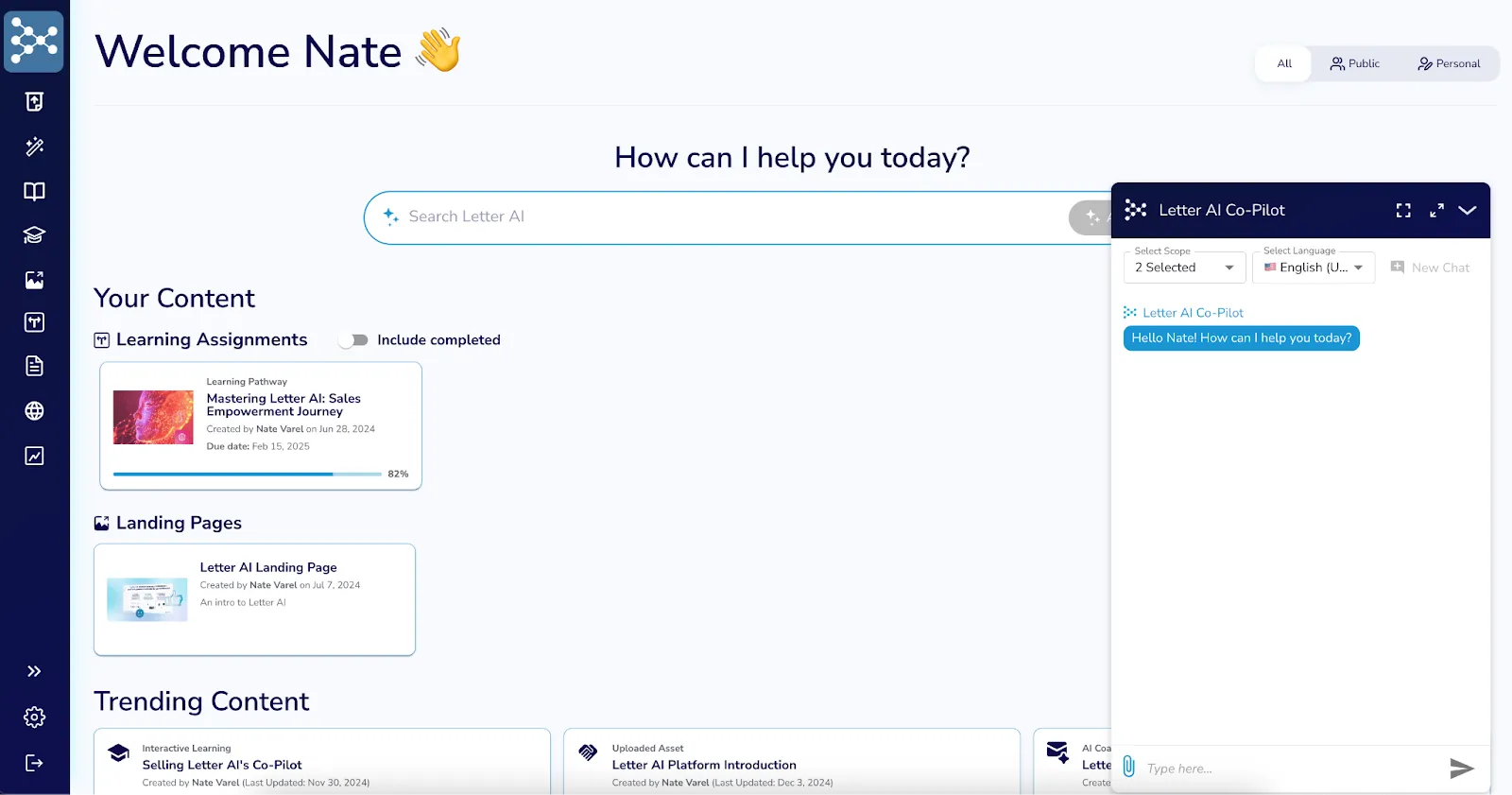
Letter AI is an AI-native revenue enablement platform that combines content management, learning, coaching, and deal pursuit capabilities. Unlike the legacy platforms that bolted AI onto existing systems, Letter AI was built from the ground up with generative AI at its core.
What it does well:
Letter AI excels at speed. The platform can streamline the generation of training courses, role-play scenarios, sales collateral, and even full certification pathways in minutes by leveraging your existing documents and knowledge base. For small enablement teams supporting fast-growing GTM organizations, this AI-powered content creation provides leverage that wasn't possible before.
The AI role-play coaching is notably realistic. Sales teams can practice pitches, objection handling, and negotiations with AI personas that adapt to different buyer scenarios and respond with contextually relevant pushback—all generated from your company's own content and methodology.
The Letter AI Agent acts as an always-available co-pilot, answering product questions, surfacing content, and providing guidance based on your company's knowledge base. It's accessible via Slack, Teams, or directly in the platform.
What it doesn’t:
Letter AI is newer to the market than legacy platforms, so it's still developing its full slate of enablement features. The deal rooms and RFP automation are functional but less mature than purpose-built tools designed for buyer collaboration.
The platform is heavily AI-dependent, which means outputs can occasionally be unpredictable or require more review than manually created content. While Letter AI does its best to implement safeguards against AI "hallucinations" (anchoring responses in your knowledge base), teams still need to verify AI-generated training and content before deploying it.
The biggest drawback is more philosophical: the AI role-play approach is a bet on a relatively new enablement methodology.
Traditional role-play with real managers and peers provides feedback on soft skills, reading the room, and adapting to human reactions—capabilities for which AI coaching remains unproven. If your enablement strategy relies heavily on nuanced coaching and interpersonal skill development, Letter AI's AI-first approach may feel insufficient.
Implementation also requires a solid existing knowledge base to work best. While Letter AI can work with limited content, the platform delivers maximum value when it has substantial company documentation to draw from.
Major features:
- AI-powered training and certification pathway generation
- AI role-play coaching for sales scenarios (novel but unproven at scale)
- Content creation and management with AI assistance
- Letter AI Agent for instant answers and guidance
- Basic sales rooms
- End-to-end RFP automation
- Multi-language support (25+ languages)
Best for: Resource- and time-strapped enablement teams where training at scale is the biggest growth bottleneck and content management and sales rooms are less of a priority.
Pricing: Custom pricing only
7. Mindtickle
G2 Rating: 4.7/5 stars
What it is:
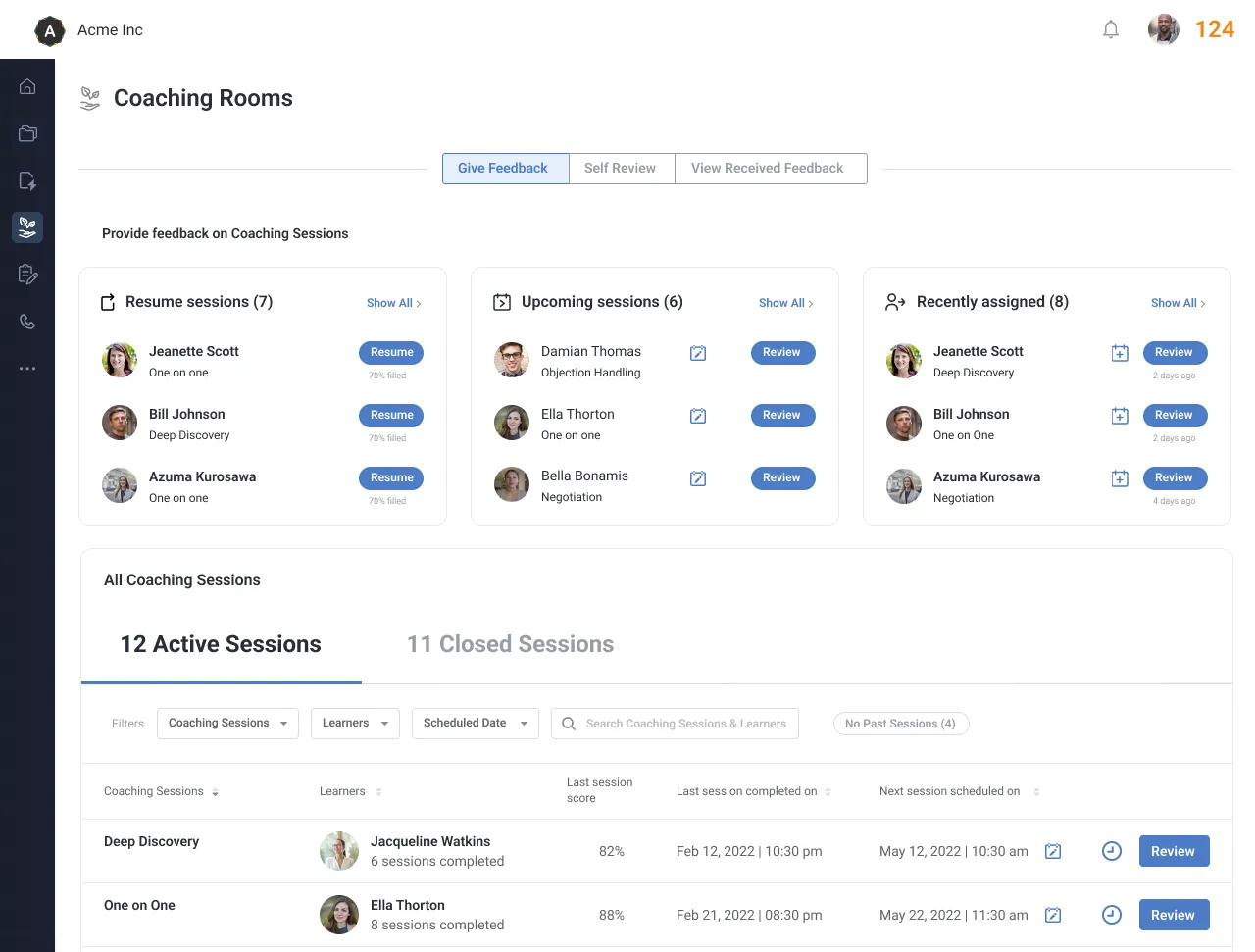
Mindtickle is a revenue readiness platform that focuses on measuring and improving seller performance through training, coaching, and skill assessment. It combines learning management, conversation intelligence, and performance analytics to link enablement efforts directly to revenue outcomes.
What it does well:
Mindtickle's core strength is its performance-centric approach. The platform's Readiness Index scores reps based on training completion, skill assessments, call performance, and CRM data—giving managers a unified view of who's ready to sell and who needs coaching. This data-driven methodology helps identify skill gaps at scale and tie enablement investments to actual rep performance.
The conversation intelligence and call scoring features analyze calls against frameworks like CHAMP and MEDDPICC, surfacing coaching opportunities based on real deal execution. AI-graded role-plays allow managers to deploy practice programs at scale without manually reviewing hundreds of video submissions.
Mindtickle also excels at role-based learning paths and gamification. Reps get customized training based on their role, experience level, and identified skill gaps, which increases engagement and makes onboarding more targeted.
What it doesn’t:
Mindtickle is complex and requires significant administrative overhead. Users consistently report that the platform has a steep learning curve, slow content loading times, and requires dedicated enablement staff to maintain training programs, update content, and manage the system. For lean teams, this admin burden can be prohibitive.
Its digital sales rooms are basic. Mindtickle added deal rooms to expand beyond training, but they're clearly secondary to the core LMS and coaching features.
Users also report the platform's reporting and dashboards are less flexible than promised. Teams often need to export data to other tools to get the views and insights they actually need.
Finally, Mindtickle is expensive. Contract minimums are high, and the complexity of the platform means you'll need dedicated resources to get value from it—making it a tough sell for mid-market teams with limited enablement staff.
Major features:
- Readiness Index scoring based on training, assessments, and CRM data
- Conversation intelligence with CHAMP/MEDDPICC call scoring
- AI-graded role-play and video coaching
- Customizable learning paths and certifications
- Sales coaching rooms for manager feedback
- Basic digital sales rooms (limited functionality)
- Mindtickle Copilot for AI-assisted content and training creation
- Gamification and leaderboards
Best for: Enterprise-sized teams (200+ sellers) that take a metrics-driven, development-first approach to enablement. Best fit if you need deep performance analytics, structured coaching programs, and have dedicated enablement staff to manage the platform.
Pricing: Estimated minimum of $90K annually + monthly per-seat fees.
8. GTM Buddy
G2 Rating: 4.8/5 stars
What it is:
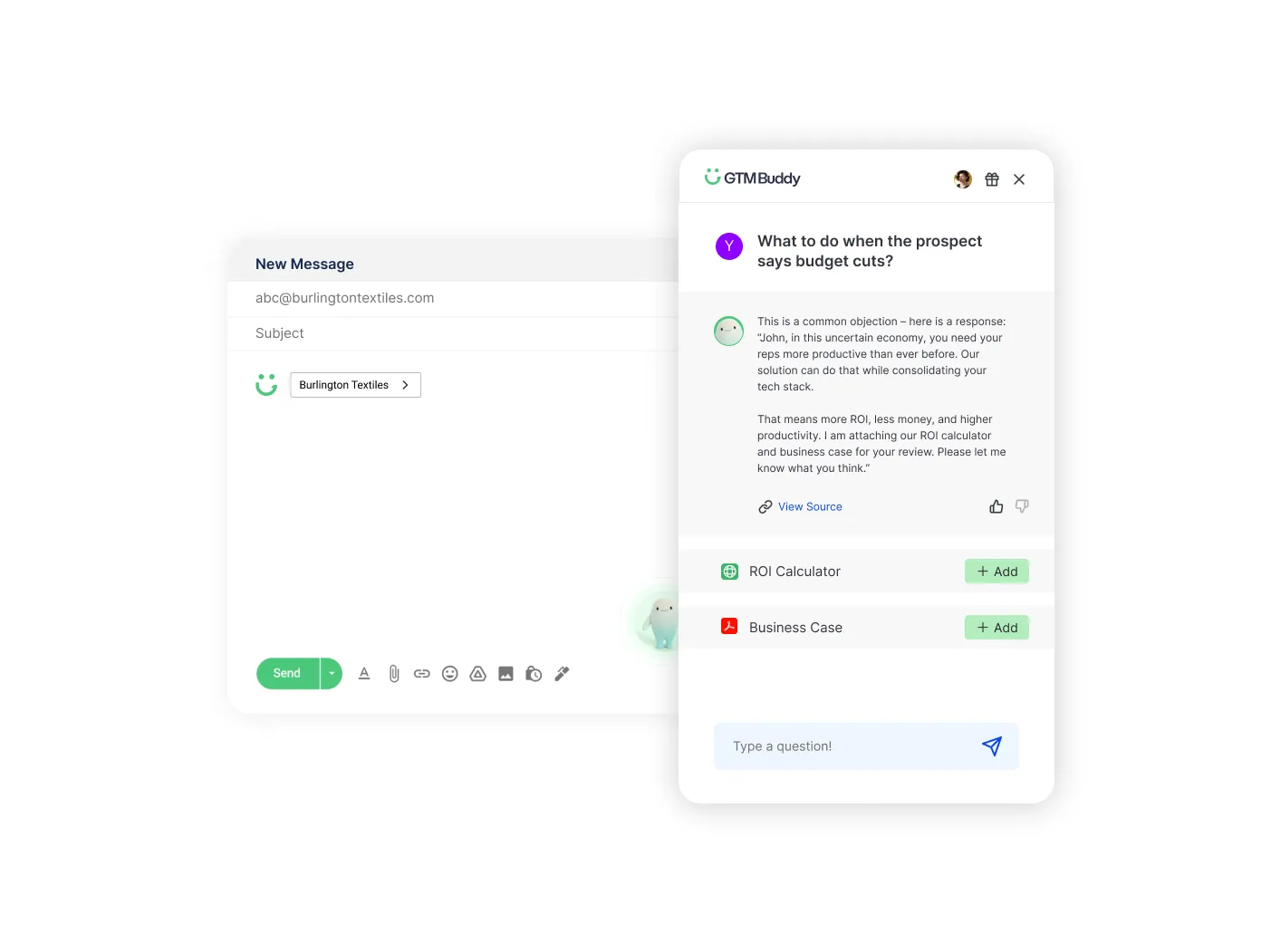
GTM Buddy is an AI-powered enablement platform in the same vein as Spekit that surfaces content, training, and guidance directly in the tools reps already use—email, calendar, CRM, Slack. It combines content management, learning, and digital sales rooms.
What it does well:
GTM Buddy's core strength is contextual content discovery. The platform's AI automatically indexes and tags content without requiring manual folder structures or complex taxonomies. Reps can search using natural language and get recommendations based on deal context, buyer persona, region, or sales stage—all without leaving their workflow.
The platform works where sales teams actually work. GTM Buddy integrates with Gmail, Outlook, Salesforce, and calendar apps to surface relevant content and meeting prep materials. This workflow integration drives higher adoption than standalone enablement platforms.
Content analytics are strong. Product marketers and enablement teams can track which assets are being shared, how buyers engage with them, and which content influences deals—making it easier to identify what's working and what's not.
What it doesn’t:
GTM Buddy's digital sales rooms are functional but less developed than purpose-built tools. They work well for sharing curated content bundles, but lack the project management depth, mutual action plans, and post-sale transition that platforms like Dock offer.
The learning management features are also lighter than dedicated LMS platforms. GTM Buddy handles training content and AI role-plays, but teams with complex certification requirements or advanced coaching needs may find it limited compared to Mindtickle or other training-first platforms.
The platform is primarily sales-focused. While it supports some broader GTM roles, it's not as revenue-wide as platforms built explicitly for CS, enablement, and marketing teams working together across the customer lifecycle.
Major features:
- AI-powered content discovery with auto-indexing
- Content recommendations in email, calendar, and CRM
- Rudimentary digital sales rooms with engagement tracking
- Learning management and AI role-play scenarios
- "Ask Buddy" AI co-pilot for instant answers
- Content performance analytics tied to deal influence
- Meeting prep automation with call agendas and talking points
Best for: Sales teams where content discoverability is the main bottleneck—reps waste time hunting for assets or share outdated materials. Choose this if high adoption of enablement tools has been a persistent problem and you need something that works inside existing workflows rather than another standalone platform.
Pricing: Custom pricing on demand
9. Gong
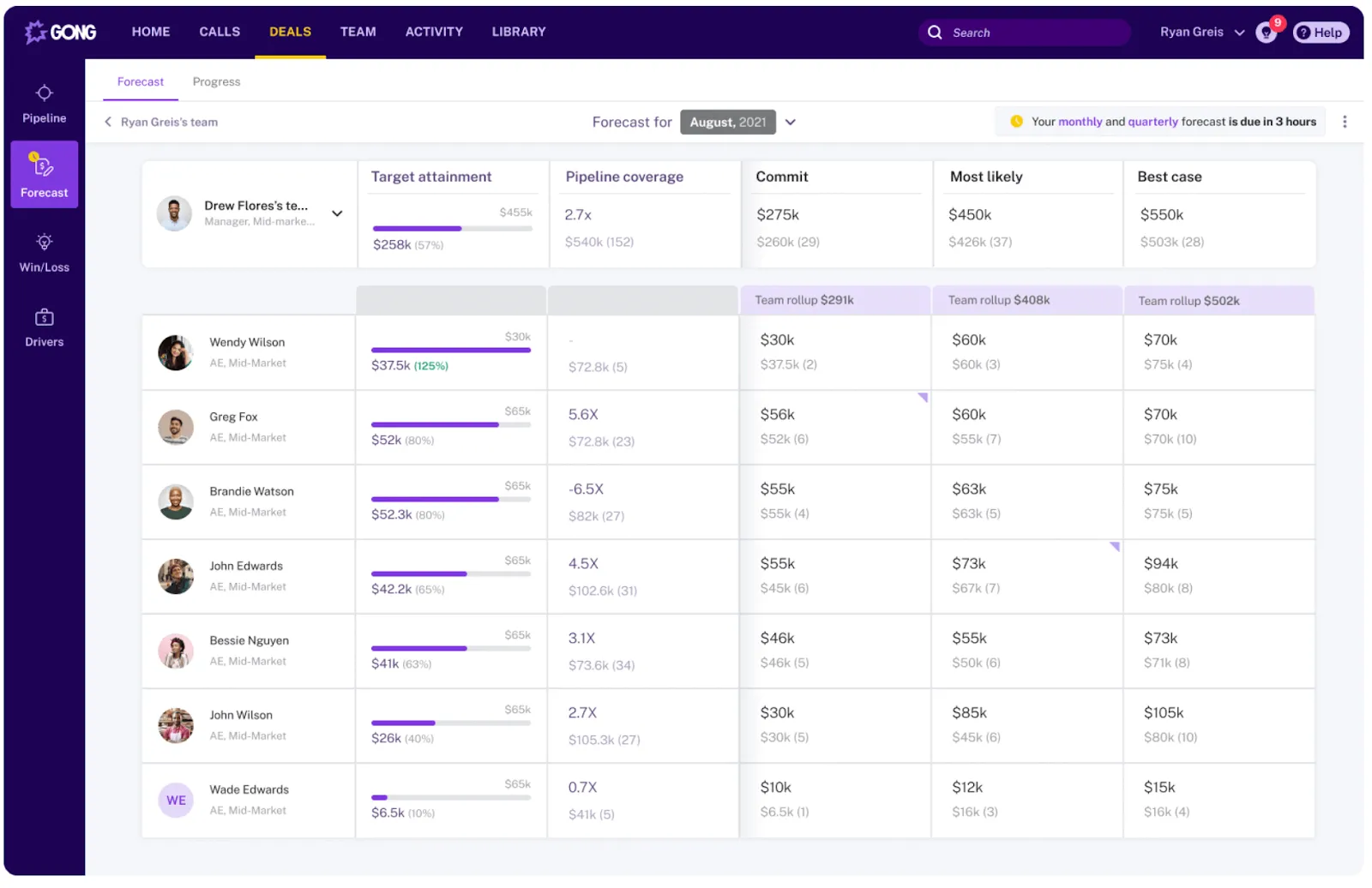
G2 Rating: 4.8/5 stars
What it is:
Gong is a revenue intelligence platform that records, transcribes, and analyzes customer conversations across calls, emails, and meetings. It's not a full enablement platform—it's a conversation analytics and forecasting tool that works alongside your enablement stack to provide sales performance and deal insights.
What it does well:
Gong excels at surfacing what's actually happening in deals: what messaging reps are using, how buyers are responding, which objections are coming up, and where deals are stalling based on conversation patterns.
The forecasting and deal intelligence are more accurate than CRM-based predictions because they're grounded in real buyer signals—not just rep-updated deal stages. Gong analyzes 300+ data points from conversations to identify at-risk deals, competitive mentions, and buyer engagement levels that would otherwise be invisible.
Gong integrates well with most enablement platforms on this list. Many teams use Gong to identify coaching needs (which objections are reps struggling with, which talk tracks are working), then use their enablement platform to deliver the training and content to address those gaps.
For example, Gong might reveal reps aren't handling pricing objections well—then you'd build role-play scenarios in Letter AI or Mindtickle, or create battlecards in Dock or Highspot to fix the problem.
Gong can also pull in buyer engagement data from your enablement platform. If you're using Dock, for instance, workspace analytics (which stakeholders are viewing content, what they're engaging with) flow into Gong's deal intelligence—giving you a more complete picture of deal momentum that combines both conversation signals and buyer behavior outside of calls.
The platform helps validate whether enablement investments are working. You can see if reps actually use the messaging you trained them on, whether new playbooks improve conversion rates, and which content resonates with buyers.
What it doesn’t:
Gong is conversation intelligence, not true enablement. It's a diagnostic tool that tells you what's happening and what needs to improve, but you'll need a separate enablement platform to act on Gong's insights.
The AI analysis can miss nuance in complex, multi-stakeholder conversations. Gong is better at identifying patterns across many calls than understanding the political dynamics or subtle buyer signals in a single high-stakes enterprise deal.
Gong also requires significant change management. Reps can be resistant to having all their calls recorded and analyzed, especially if the culture doesn't already support open coaching.
The price point is on the higher side—especially for smaller teams. If you primarily need call recording and transcription without the advanced analytics and forecasting, lighter alternatives like Fathom, Avoma, or Fireflies offer basic conversation capture at a fraction of the cost.
Major features:
- Call recording, transcription, and analysis across Zoom, Teams, and phone
- Deal risk scoring and forecasting based on conversation data
- Competitive intelligence tracking (mentions, win/loss patterns)
- Coaching insights with call snippets and talk tracks
- AI-generated call summaries and follow-up emails
- Pipeline and rep performance dashboards
- Integration with CRM, enablement platforms, and sales engagement tools
Best for: Mid-market to enterprise teams (50+ reps) that want coaching data and deal visibility to complement their enablement platform. Think of Gong as the diagnostic layer—it shows you what's broken so you can use Dock, Highspot, Mindtickle, or another enablement tool to fix it. If you just need call transcription without advanced analytics, consider simpler tools like Fathom first.
Pricing: $1,200-$1,600 per user annually (volume discounts at 50+ users), plus a $5,000-$50,000 annual platform fee depending on team size. For a 50-person team, expect about $80K-$90K annually.
How to choose a revenue enablement tool
Every enablement solution solves a different core problem. Here's how to figure out which one fits your team:
1. Start with your biggest bottleneck
Don't try to solve everything at once. Pick the tool that solves your most painful problem first.
- If your main problem is that buyers can't sell internally during complex cycles, start with Dock.
- If it's reps can't find content, look at GTM Buddy or Highspot.
- If it's training new reps at scale, consider Letter AI or Mindtickle.
Most tools index highly on one functionality.
2. Consider your team size and budget
Mid-market teams (5-100 sellers) typically can't justify $100K+ contracts with 6-month implementations.
- Dock, GTM Buddy, and Spekit are built for faster deployment and mid-market pricing.
- Seismic, Highspot, and Mindtickle make sense at 200+ reps with dedicated enablement staff.
3. Think about adoption, not features.
The best platform is the one your reps will actually use. Tools that live in existing workflows (Dock, GTM Buddy, Spekit) typically see higher adoption than standalone platforms. Deal rooms and buyer collaboration features (Dock) get used because they help reps close deals, not just complete training.
4. Look for AI that solves real problems.
Every platform claims to be "AI-powered," but not all AI is useful.
The best implementations automate tedious work (content tagging, document generation, meeting prep) or surface insights you couldn't get manually (buyer engagement patterns, deal risks).
Avoid platforms that add AI features just to check a box—focus on tools where AI actually saves time or improves decisions.
5. Plan for the full tech stack
Most teams need conversation intelligence (Gong or a lighter alternative like Fathom) plus an enablement platform. Gong shows you what's broken—your enablement platform fixes it. Don't expect one tool to do everything.
Plan for 2-3 complementary tools instead of one monolith.
6. Test before you commit
Most platforms offer free trials or POCs. Run a pilot with 5-10 reps on real deals before signing annual contracts.
Measure key enablement metrics and KPIs like time saved, content findability, rep ramp time, time-to-first-deal win rates, revenue growth, and whether reps actually open the tool daily. The right platform should optimize these outcomes within 90 days.
Choose the platform that solves your biggest problem
Revenue enablement isn't one-size-fits-all.
Seismic and Highspot work for global enterprises with complex governance needs. Mindtickle excels at performance management. Gong gives you coaching intelligence. GTM Buddy solves content discoverability.
Dock is built for mid-market teams where buyer collaboration and deal velocity matter more than enterprise bloat. If you're running complex sales cycles and need to enable both your reps and your buyer champions without the overhead of legacy platforms, Dock is worth a look.
Want to see how Dock works for revenue teams? Try it out for yourself — it’s free for up to 50 workspaces.
We’re also happy to run a pilot with your team. Book a demo with our sales team.
Revenue Enablement Software FAQs
What is revenue enablement software?
Revenue enablement software gives customer-facing teams—Sales, Customer Success, Marketing, and RevOps—the tools, content, and real-time guidance they need to drive revenue across the entire customer lifecycle.
The term "revenue enablement" signals a shift from the old sales enablement model. Traditional sales enablement software focused primarily on training sales reps and managing sales content.
Revenue enablement expands that to support the full customer journey: from first contact through onboarding, expansion, and renewal.
What's the difference between sales enablement and revenue enablement?
Sales enablement focuses on helping sales reps close deals—providing training, content, and tools to convert leads into customers. Revenue enablement expands that scope to include the full customer journey: buyer enablement (helping prospects evaluate and buy), customer success enablement (supporting CS teams), and customer enablement (helping users get value from your product). Revenue enablement recognizes that Marketing, Sales, and CS all contribute to revenue, not just the sales team.
How much does revenue enablement software cost?
- Pricing varies dramatically based on team size and platform complexity.
- Mid-market options like Dock, GTM Buddy, and Spekit typically range from $5K-$50K annually for teams of 20-100 users.
- Enterprise platforms like Seismic, Highspot, and Mindtickle start around $50K-$100K+ annually with longer implementation timelines.
- Conversation intelligence tools like Gong add $1,200-$1,600 per user annually plus platform fees.
For mid-market teams, expect to budget $20K-$75K for a core enablement platform plus any supplementary tools. For enterprise teams, expect to spend at least $100k.
Which revenue enablement platform is best for mid-market teams?
Mid-market teams (5-100 sellers) typically need platforms that balance capability with fast implementation and reasonable pricing.
- Dock works well for teams focused on buyer collaboration and full lifecycle support.
- GTM Buddy fits teams struggling with content discoverability and adoption.
- Spekit works for just-in-time knowledge delivery.
Avoid Seismic, Highspot, and Mindtickle unless you have 200+ reps and dedicated enablement staff—these require significant admin overhead and budgets that don't scale for smaller teams.
How long does it take to implement revenue enablement software?
Implementation timelines vary widely by platform.
Mid-market tools like Dock, GTM Buddy, and Spekit typically go live in days to weeks with minimal setup—basic configuration, content uploads, and CRM integration.
Enterprise platforms like Seismic, Highspot, and Mindtickle require 3-6 months for full deployment, including content migration, taxonomy setup, training programs, and change management.
The fastest route: start with a pilot of 5-10 reps on real deals before rolling out company-wide. This lets you test adoption and measure impact before committing to a full implementation.


Related Revenue Lab Articles
.webp)

.webp)

.webp)

Templates for Sales, Onboarding,
Projects and Portals
Customize and share with clients


