
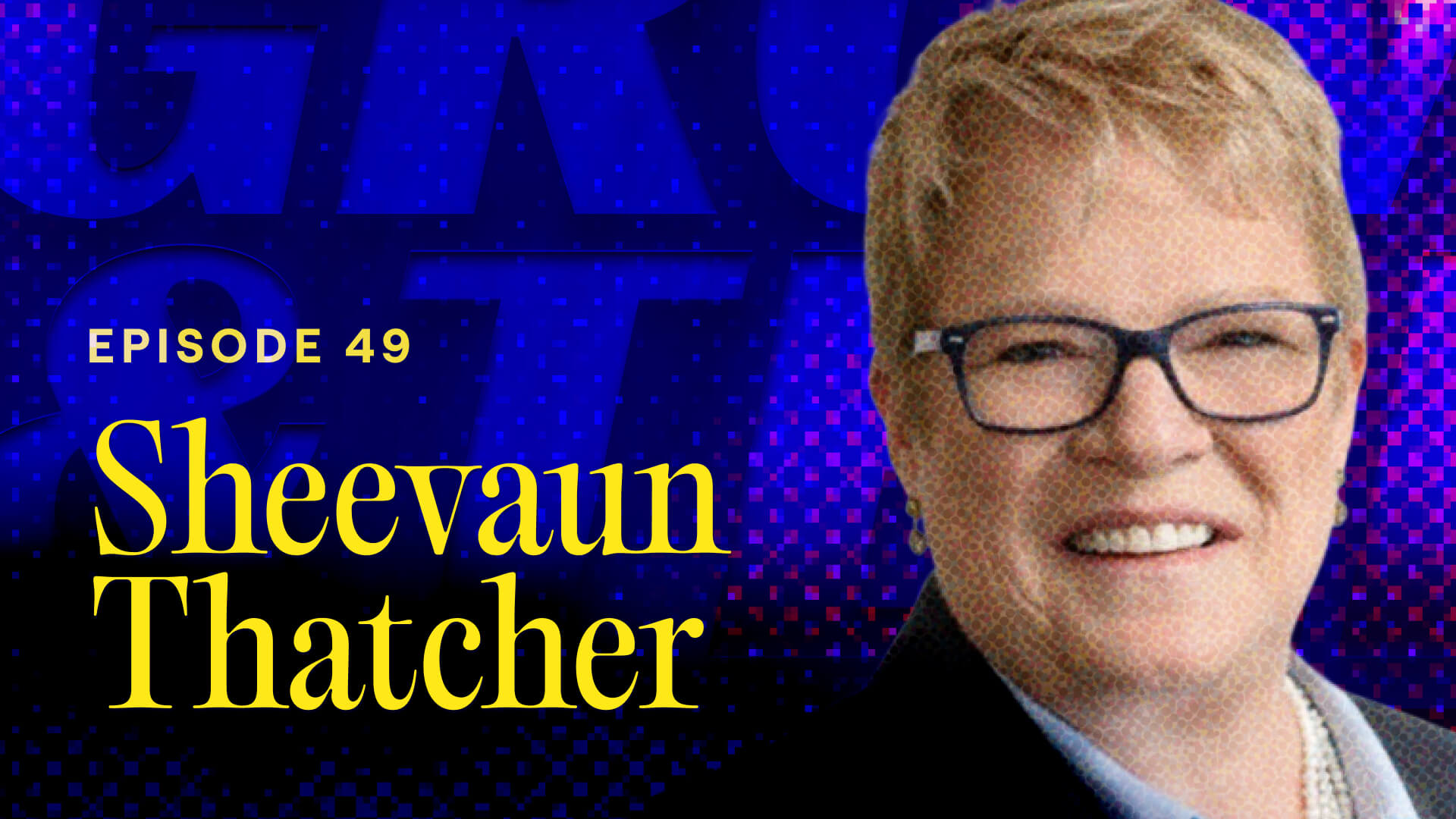
Most enablement teams drown in requests. Demandbase’s Sheevaun Thatcher built a framework to say no—and a philosophy that makes sales leaders own the work.
When Sheevaun Thatcher joined Demandbase as VP of Revenue Enablement in April 2025, she inherited a familiar problem.
The enablement team was in service mode—saying yes to everything, working on projects that didn't move the needle, and getting blamed when things didn't work.
Sheevaun has spent three decades building enablement functions at companies like RingCentral, Slack, and Salesforce. At RingCentral, she took a three-person team to 162 people as the company scaled from $300M to $2B in revenue. She knows what breaks at scale when enablement doesn't have a backbone.
Her fix isn't more headcount or better tools. It's a prioritization framework that forces hard conversations upfront, and a philosophy that redefines who owns what—enablement builds the programs, sales leadership owns the execution. If that line gets blurred, nothing works.

Growth Bytes
Top takeaways:
- Use the five questions to filter enablement requests: How does it align with go-to-market? Where does it fit in priority? How will we measure it? What behavior should change? Is there credible urgency?
- Enablement is responsible to the business, not for it. Sales managers own execution. If you don't establish this early, enablement becomes the scapegoat.
- Lead onboarding with value, not features. Teach sellers to open with pain points and "why customers buy" conversations—not with feature lists and product deep dives.
- Roll out enablement programs to leadership first. When the CEO does the pitch contest before anyone else, managers take ownership and reps follow.
- Measure enablement on business KPIs, not vanity metrics. Completion rates and CSAT scores don't move revenue. Focus on sales velocity, win rates, and deal size.
- AI role play works for everyone, not just new reps. Reinforcement is a gap in most enablement programs. Role-play practice prevents the forgetting curve.
The Five Questions Prioritization Framework
Sheevaun's first move at Demandbase was to audit every project the enablement team was working on. She realized the team had been accepting requests from everywhere—sales leaders, the CEO, product marketing—without asking whether the work aligned with what the business needed to accomplish.
She taught them to ask five questions before committing to anything.
1. How is this aligned with go-to-market?
That assumes there's clarity in go-to-market strategy, which isn't always a given. Sheevaun believes her job is to help create that clarity in the first place.
2. Given everything we're already doing, where does this fit in priority?
Not just for you, but for your team, your division, and the company. Sheevaun says everyone believes their request is priority one.
"If everything's a priority, nothing is. So let's start with what you've already asked us to do. What are you willing to push? What are you willing to stop in order for this to be worked on?"
A lot of times, they’ll say, “Never mind.”
3. How are we going to measure it?
What business KPIs do we expect to change (e.g., performance, attrition, churn) to show that this initiative mattered?
4. What behavior do you expect to change?
What do you want sellers to physically do? Make more calls, spend less time on administrivia, do deeper research before reaching out?
5. Is there credible urgency to this?
Or is it just an idea someone had? The scariest five words in enablement, Sheevaun says, are "Hey, I have a great idea."
The five questions became the filter. Sheevaun built them into an Asana spreadsheet—not just to track who requested what and when it's due, but to document the answers to all five questions.
The spreadsheet forced internal stakeholders to think harder about what they were asking for. It gave the enablement team the ability to say “no,” or "not us," or "not now,” without it becoming a political fight.
Enablement Owns the Program, Sales Owns the Execution
The five questions set priorities. But they don't solve the deeper problem: who's accountable when things don't work?
Sheevaun has a mantra for this. She calls it #R2N4—responsible to, not for.
Enablement is responsible to sales managers to provide the best possible programs. Messaging, product releases, skill training, whatever is needed. But enablement is not responsible for the sale.
Sales managers are responsible for executing enablement programs. They own whether reps show up, practice, and use what they learned. If that line doesn't get established early, managers pass the buck. Reps tune out. Nothing sticks.
Sheevaun learned this at RingCentral. Near the end of her final interview for the sales enablement leadership role, the SVP of Enterprise Sales asked her: "This all sounds great, but what happens if my people don't do it? What are you going to do?"
Her response: "I'm not going to do anything. What are YOU going to do?"
He chuckled. That's when she knew they were going to transform the organization.
If R2N4 isn't established early on with full sales manager buy-in, it doesn't matter how good the enablement team is, what the resources look like, or what the investment is. The programs will fail.
The quid pro quo is clear. Enablement delivers results—programs that change behavior, move metrics, and impact revenue. In return, enablement gets more resources. But the accountability for execution stays with sales leadership. If managers don't own it, reps won't either.
Build Onboarding Around the Three P’s
At Demandbase, Sheevaun structures onboarding around three P’s: people, process, product. In that order.
People: Origin stories and the "why" behind the company
New hires spend time on origin stories, understanding customers, and learning use cases.
- Why do customers buy from Demandbase?
- Why are they buying now?
- Why Demandbase instead of someone else?
- Why does the company exist?
Sheevaun discovered at RingCentral that outside of sales and product marketing, almost no one knew these answers. She helped build the “why” story into the entire company’s onboarding going forward.
Process: Here's how we sell
The second P is process: Here's how we sell at Demandbase.
Demandbase uses the SPICED model from Winning by Design and the 9-box solution selling method. New hires learn the frameworks before the product to understand how the company thinks about selling.
Product: Light touch, learn to fish
Product comes last, and it's light. Sheevaun says you’ll lose good sellers if you do months of product training. New hires don't need product depth early. They just need to know what it is, what it does, and what customers buy.
"They need to be able to have conversations, not go deep on product. They have to have value conversations, not product conversations."
As reps get more experienced, the job is teaching them how to fish in the moment of need. Precision over volume.
Coaching Managers: The Biggest Gap in Go-to-Market
Sheevaun believes the biggest failure in enablement is that most sales managers don’t know how to coach because they’ve never been trained to do so. Most companies focus on pipeline and forecast.
When high performers get promoted into management roles, they struggle to teach what they do because it's unconscious competence—just like how many dominant athletes don’t make great coaches.
If those new managers haven't been coached on how to coach, they'll just recount what they learned—pipeline and forecast. Skills get ignored. One-on-ones turn into deal reviews.
"It's not just the managers who don't know how to coach. If you go up another level, they don't know how to coach managers. And you go up another level, they don't know how to coach VPs."
The way to develop those skills starts at the root of any enablement initiative or request. Get them involved in the five questions. Get them involved in giving feedback on what's working.
Then, when you roll it out, you roll it out to managers first. They're not being trained, but auditing to make sure they're on the same page. By the time the training gets to the reps, everybody above them has already done it.
At Demandbase, the company did a big pitch contest for their revenue kickoff. The CEO reached out to Sheevaun and said, “I want to do it too.” Because the CEO stepped up, the CRO and all the other senior leaders did it too. That leadership and manager investment quickly spread across the organization.
From Product-Led to Value-Based Selling at Demandbase
One of the first things Sheevaun noticed at Demandbase was that the company had been product-led for a long time. Most sales conversations were product, product, product. So Sheevaun and Greg Philiotis, Demandbase CRO, pushed a move to a value-based sale.
Sheevaun says most companies that come to Demandbase have already done their research. They’re trying to find out: do you understand their pain? Can you help them solve it? Do you understand what their business is about—as opposed to pounding product into them?
"Otherwise, you're simply a list and a set of checkboxes on a clipboard, and then it's yes, no, yes, no, how much is it?"
To do great value selling, Sheevaun suggests giving sellers five to ten open-ended discovery questions they can ask to a customer. If they see the value upfront, great. If not, can you create value? If you can't create value, can you reset their vision? If not, get out.
Where AI Is Actually Working in Enablement (and Where It's Not)
Sheevaun's favorite AI use case for enablement so far is AI role-play and coaching, because it makes training reinforcement scalable in a way that wasn't possible before.
Sheevaun says she’s been to too many SKOs where they do fabulous training, but there's no follow-up, and two months later—surprise—reps have just come back to the way they did it.
So not only do new hires go through multiple AI role-plays for various personas, customer types, and markets during onboarding, but even experienced reps do AI role play to reinforce training.
But Sheevaun admits she's been in the "disillusionment trough" of AI hype for nearly everything else. She says you have to be very specific about what you’re going in for, otherwise you can waste a lot of time.
Sheevaun uses ChatGPT for quick questions, and Claude for complex, process-heavy work. She recently created a masterclass in Claude in 12 hours—work that would have taken her four months. But she says it only worked because of the hard-won experience that went into her prompts.
"AI doesn't have intuition, it doesn't have empathy, it doesn't have gravitas. It doesn't have 40 years of experience doing enablement and pre-sales."
Sheevaun says that without those human inputs, everything becomes homogenous.
Measuring Enablement: Stop Chasing Vanity Metrics
Sheevaun believes CSAT scores, completion rates, and average scores are vanity metrics.
Yes, they're still an important signal, but they’re not what her stakeholders care about.
"This is why a lot of enablement leaders struggle—they go in thinking, 98% of the people went through it, the average score was 92 out of 100, and we got great CSATs. And [sales] leaders are going, ‘I haven't seen any difference.’"
Sheevaun recommends aligning those vanity metrics with performance metrics to answer the revenue questions that matter:
- Did wins go up?
- Did the average sales price go up?
- Did the length of sale shorten?
With that said, your content and training still need to get adoption to be able to impact those metrics.
“Go to any company and ask them how much of the marketing material is actually seen by sales,” says Sheevaun. “You'll see numbers like 25%. Which means 75% of all the work being done by marketing is never seen.”
Sheevaun says hour-long videos or 50-slide decks will get ignored. Nobody has that attention span.
She recommends breaking things up into consumable chunks that always answer two things:
- If I'm a seller, what's in it for me? Why should I care?
- How will it help my customer buy from me?
Sheevaun says everything comes together when you make accountability clear: Enablement delivers programs that move the business forward. Sales leadership owns the execution. Marketing creates content that helps customers buy, not just helps reps sell.
When all three pieces work together, you stop being a fixer of broken things and start being a revenue driver.
Watch the full episode
Watch Alex and Sheevaun's full conversation on Grow & Tell, Dock's podcast for revenue leaders.


Related Revenue Lab Articles





Templates for Sales, Onboarding,
Projects and Portals
Customize and share with clients


